No Other Choice is a crowd-pleaser that asks its audience to push back against capitalism before it consumes their humanity.
Park Chan-wook’s (Oldboy, Decision to Leave, The Sympathizer) Don McKellar, Lee Kyoung-mi, and Lee Ja-hye’s No Other Choice understands that job-hunting can be one of the most demoralizing things a human being can experience. The process of submitting your resume and the anxiety that comes with not getting a reply is soul-crushing. It doesn’t matter how qualified you are for a role; it often feels as if you are not enough, no matter what you do. You may start resenting yourself, your competition, and even your family (if one is in the picture) as a coping mechanism.
What makes this ever more infuriating is that we have allowed capitalist governments to dictate our worth, and thus turning us into the very monsters that put us in these circumstances to begin with. No Other Choice addresses these themes in a comedic fashion while forcing us to question our role in perpetuating such an abusive system.
Synopsis
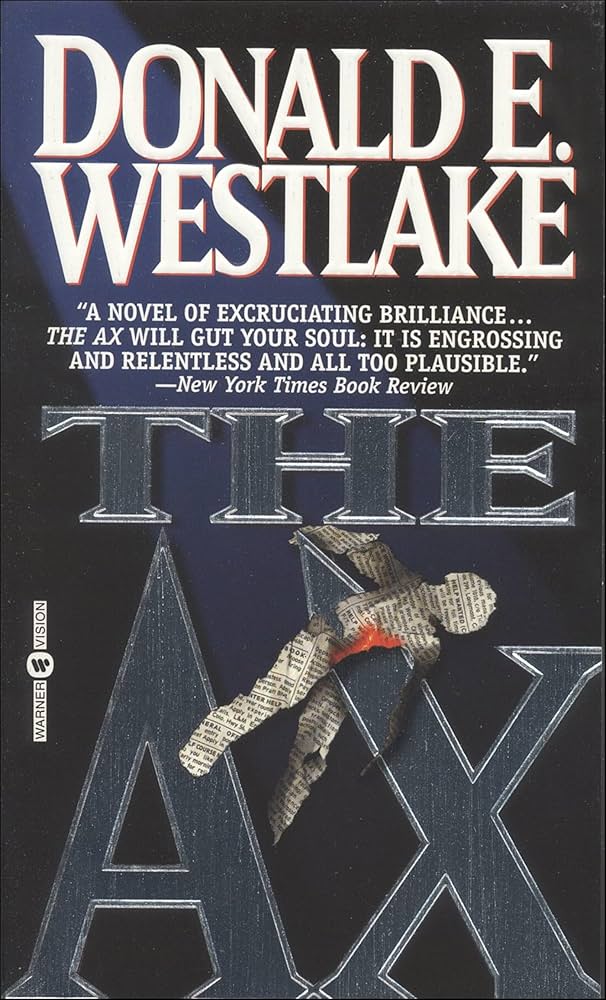
Based on Donald E. Westlake’s novel, The Ax, No Other Choice sees a model employee, Yoo Man-soo (Lee Byung-hun, Squid Games), who is suddenly let go from his job after twenty-five years of hard work and loyalty. Amidst the financial debt consuming him, he sets his sights on a coveted job at a rival company. Things don’t prove to be easy, with competition threatening his chances of securing the job. Man-soo’s solution? Get rid of his rivals, one by one.
Nobody Wins in Capitalism
Although Man-soo and his family clearly enjoy the privileged lives they have, a level of care and empathy for others endears them to us. When American investors join the paper company he works for and demand a list of people to fire, he stands by his values and attempts to save their jobs, only to lose his in the process. It is from here that the film slowly unravels a journey of losing one’s humanity for one’s needs. A descent into madness, per se, sparked by America’s capitalist machine, trying to replace hard workers with automation.
No Other Choice’s first hour sees Man-soo try out other jobs, but ultimately feels out of place not doing what he dedicated twenty-five years of his life to the paper company. It’s an interesting dilemma Park Chan-wook raises because Man-soo’s priority should be providing for his family. Yet, his dissatisfaction leads him not to want to take any job that isn’t about paper. This presents the issue of education in relation to the workforce. Growing up, we are told to excel in a particular vocation. In some cases, we pay thousands of dollars towards an education that should secure us a job in our desired field. However, as No Other Choice points out, it’s never a sure thing, even if it was promised by the same capitalist system that put us in the path we’re in.
This is as good a time as any to sing Lee Byung-hun’s praises. Talk about a layered role. Lee must convey the desperation that comes with finding work, losing one’s mind in the process, and simultaneously keep cool in front of his wife and children. On top of all that, Lee’s physicality sells the more outlandish set pieces, where No Other Choice occasionally turns into a dark slapstick comedy with murder attempts.
Unexplored Potential in the Supporting Cast
Due to the film’s structure, we live in Man-soo’s head for almost the story’s entirety. As beneficial as this is for his character, allowing us to see his transformation from a good man with morals to one who’d be willing to kill to maintain his status, this leads to the rest of the cast feeling somewhat underdeveloped. Arguably, this works in the movie’s favor. Man-soo’s family is pushed to the backdrop, with his fixation on his competition taking priority. There are beats meant to be emotional with Man-soo’s targets that simply aren’t all there. This is either because their storylines are rushed or their backstories are too basic.
Then there is the issue with the kids. Both Choi So-yul and Kim Woo-seung are rather wonderful as Ri-won and Si-won, respectively. Though again, we don’t spend enough time with them to care about their actions. That’s a shame because they are both a reflection of Man-soo’s persona. Ri-won’s obsession with the cello and wanting to be the best player once she comes of age is dangerously similar to her father’s relationship with paper. This is the exact fixation that put Man-soo on the violent path he’s seen in. As for Si-won, the rush of involving himself in criminal activities such as breaking and entering mirrors his dad’s behavior. Thematically, it is all there, but it just isn’t explored further than the surface level.
This brings us to Son Ye-jin’s Mi-ri, Man-soo’s wife. In a sense, she is the complete opposite of her husband. Early on, we learn that she had given up her career to become a housewife and be there for the family 24/7. As their financial struggles prove difficult, she returns to the workforce, doing a job she doesn’t love but compromises for the good of the family. Mi-ri could be considered one of the most noble characters No Other Choice has to offer. Still, the film tries to bring her morals into question in the third act with little to no actual payoff.
Signature Park Chan-wook Style
Being a Park Chan-wook production, the techs are impeccable. There is a beauty yet coldness to Ryu Seong-hie’s production design that reflects the minimalistic nature of the industrial complex. Man-soo’s childhood home is the prime example of the new clashing with the old. The interior rejects all sorts of decorative elements that would give the house a human touch. Meanwhile, the outside garden is ever-growing with trees and life.
The sets are only as good thanks to the way they are shot by cinematographer Kim Woo-hyung. Kim’s camera is constantly moving dynamically, crafting visuals never seen on screen before. Paired with Kim Sang-bum’s editing, which Park Chan-wook fans have come to love and expect, No Other Choice presents a world grounded in reality that occasionally breaks character and balances tone through visuals just as much as it does on the page. Both departments work hand-in-hand to make Man-soo’s world feel larger than it is. In turn, they highlight just how much worth he places in a job that could easily replace him, again.
It might not be the most obvious, flashy work of the year. Yet, Eunjung Kim and Kim Suk-won’s sound work really does leave an impact. Man-soo uses, or tries to use, a variety of different weapons to get rid of his victims. From guns to electric chainsaws, each one comes with its own gallery of sounds that add to the gnarly nature of Man-soo’s madness.
Final Thoughts on No Other Choice
With AI threatening countless jobs across numerous fields, our humanity is being tested in real time. For the average suit, cost-cutting is essential to succeed. For the little guy, banding together to push back against this narrative is vital to survive. In its final moments, No Other Choice questions the morality of its protagonist and that of the audience. Is it worth selling out your values and the livelihoods of others for your personal needs? For some, it absolutely is. There is no other choice but to eliminate the competition. Paying the bills and supporting one’s family takes priority over a stranger’s means of living.
Then again, at what point do we become the perpetrators of our own suffering? We often place more value on materialistic items than on our next-door neighbor. Through stunning visuals and a sharp script, despite shortcomings, Park Chan-wook successfully discusses these issues in a funny and thrilling fashion.
4.5/5
Park Chan-wook, Don McKellar, Lee Kyoung-mi, and Lee Ja-hye’s No Other Choice is now playing at Beyond Fest!
For more comedy, drama, and thriller-related news and reviews, follow The Cinema Spot on Facebook, Twitter, and Instagram! Also, follow us on Letterboxd for further feature film, short film, and limited series reviews!
If you’re looking to read Donald Westlake’s The Ax, then seek no further. You can pick up a physical copy of the novel via our Amazon Affiliates link today!