
Filmmaker Sam Raimi is back in R-rated horror with one of his bloodiest, if ever, films to date. Following his work on Marvel and Sony’s Spider-Man trilogy at the start of the century, as well as the PG-13 supernatural horror film Drag Me to Hell, the man’s newest project is the most himself that genre fans and audiences in general have ever seen. At the same time, it’s Raimi continuing to test the waters in the new decade after helming Marvel Studios’ Doctor Strange in the Multiverse of Madness, which still has his signature filmmaking style but somewhat polarizes viewers. Send Help is a cruel spin on the whole “stranded on an island” scenario, attempting to fire on all cylinders.
As someone who lives on an island in the Asia-Pacific region, at the very least, I must commend the creative forces for depicting individual survival skills and what it takes to essentially thrive in a tug-of-war between beauty and nastiness. Such is the case with working-class woman, Linda Liddle (Rachel McAdams), who is placed in a daring situation sharing the same spaces as her bourgeois employer, Bradley Preston (Dylan O’Brien). Send Help involves familiar tropes found in survival narratives, yet it embraces the uncanny nature of one losing sanity.
Send Help is written by Damian Shannon (Freddy vs. Jason, Marcus Nispel’s Friday the 13th reboot) and Mark Swift (Freddy vs. Jason, Marcus Nispel’s Friday the 13th reboot) and is directed by producer Sam Raimi (Within the Woods, the Evil Dead film franchise, Sony’s Spider-Man trilogy, Drag Me to Hell, Doctor Strange in the Multiverse of Madness).
In this review, I will discuss Send Help. As this article’s title suggests, no spoilers will be present.
Send Help Synopsis
According to 20th Century Studios, here is the official synopsis for Sam Raimi, Damian Shannon, and Mark Swift’s Send Help.
Two colleagues become stranded on a deserted island, the only survivors of a plane crash. On the island, they must overcome past grievances and work together to survive, but ultimately, it’s an unsettling, darkly humorous battle of wills and wits to make it out alive.
20th Century Studios
Discussion
Misery. Cast Away. Red Eye. These are all American films around the turn of the century that dealt with the psychological aspects of survival. Many have likened them to Send Help. Yet, going into this film, I couldn’t help but feel that Shannon and Swift’s script mirrors Kōbō Abe’s 1962 novel, The Woman in the Dunes—and Hiroshi Teshigahara and Abe’s 1964 film adaptation, Suna No Onna, or Woman in the Dunes. The two men who helped bring a crossover movie between A Nightmare on Elm Street and Friday the 13th and rebooted the latter film franchise have outdone themselves here. Seriously, a film about the dark comedies and horrors of isolation, and it isn’t a reminder of the deadly past six years lived? Brilliant enough!
The on-screen appeal of lead actors McAdams and O’Brien works wonders. Rhetorically speaking, though, their characters’ ethos and pathos fuel their performances and leave me in awe. Liddle and Preston foil each other to shocking degrees. It’s easy to lose track of how long they have been stranded. A whole different article could be written about the dualities of woman and man, labor and wealth, acceptance and refusal, danger and safety, sanity and hysteria, and more. Taking that into consideration, the characters’ relentlessness is a consistent element in Send Help‘s profound pacing.
Raimi, Shannon, and Swift’s survival narrative is a near-excellent cross-genre project featuring a lot to be expected from a Raimi production. Director of photography Bill Pope’s stunning cinematography. Editor Bob Murawski’s stylish cuts and transitions. Music composer Danny Elfman’s fever-dream-like soundtrack. And, of course, a reasonable amount of gore and jump scares. Likewise, Raimi is just as relentless, which is why movie-goers have maintained their faith in him for this long.
The Master-Slave Dialectic
Liddle and Preston’s dynamic is a major highlight in terms of ethos. From the get-go, their class disparity is set into stone. The former is an employee who is looked down upon. Meanwhile, the latter is a commanding businessman type. The former makes herself sandwiches from sliced bread and works out of a Hewlett-Packard (HP) laptop. Disputably, these could be signs of a struggling financial status. However, it could also be that she isn’t trying to live a sophisticated lifestyle. This is evident in the characters’ physical appearances, courtesy of costume designer Anna Cahill and makeup and hair designer Chiara Tripodi.
As this relationship unravels, it’s clear that the juxtaposition between power and submission isn’t new to me. Having written about the ideology in 2024 with Tribeca short, Fuck-a-Fan, and A24 erotic thriller, Babygirl, I must now return to the subject matter. Coming back to his critical text, Introduction to the Reading of Hegel, Russian-French philosopher Alexandre Kojève writes of the Slave overcoming their Master and becoming a Master themselves.
“[B]y working, the Slave becomes master of Nature … joining with it and subordinating himself to its laws by accepting the instinct of preservation. [T]he history of man is the history of his work [and therefore] must be a forced work, stimulated by fear of death, [that] frees—i.e., humanizes—man (the Slave). … The man who works recognizes his own product in the World that has actually been transformed by his work: he recognizes himself in it, he sees in it his own human reality, of the originally abstract and purely subjective idea he has of himself [but also, fear and service are necessary] constituent-elements … The Master can never detach himself from the World in which he lives, and if this World perishes, he perishes with it.”
Alexandre Kojève, ‘Introduction to the Reading of Hegel’, pp. 23, 25-27, 29
Liddle frequently risks her life and even risks not dying as a result of Preston’s own actions. Professionally, she has worked for him. Still, she continues to labor away, isolated on an island, utilizing survival instincts adopted from television. It’s in the climax that the Woman in the Dunes-esque conflict transforms into something along the lines of Richard Connell’s short story, “The Most Dangerous Game”. Shannon and Swift cite words that cannot be truer: “Monsters aren’t born; they’re created”. Preston is a product of his environment, i.e., a world of inherited affluence, but in which he doesn’t know how to thrive as an individual.
The Ups and Downs of Shooting on an Island
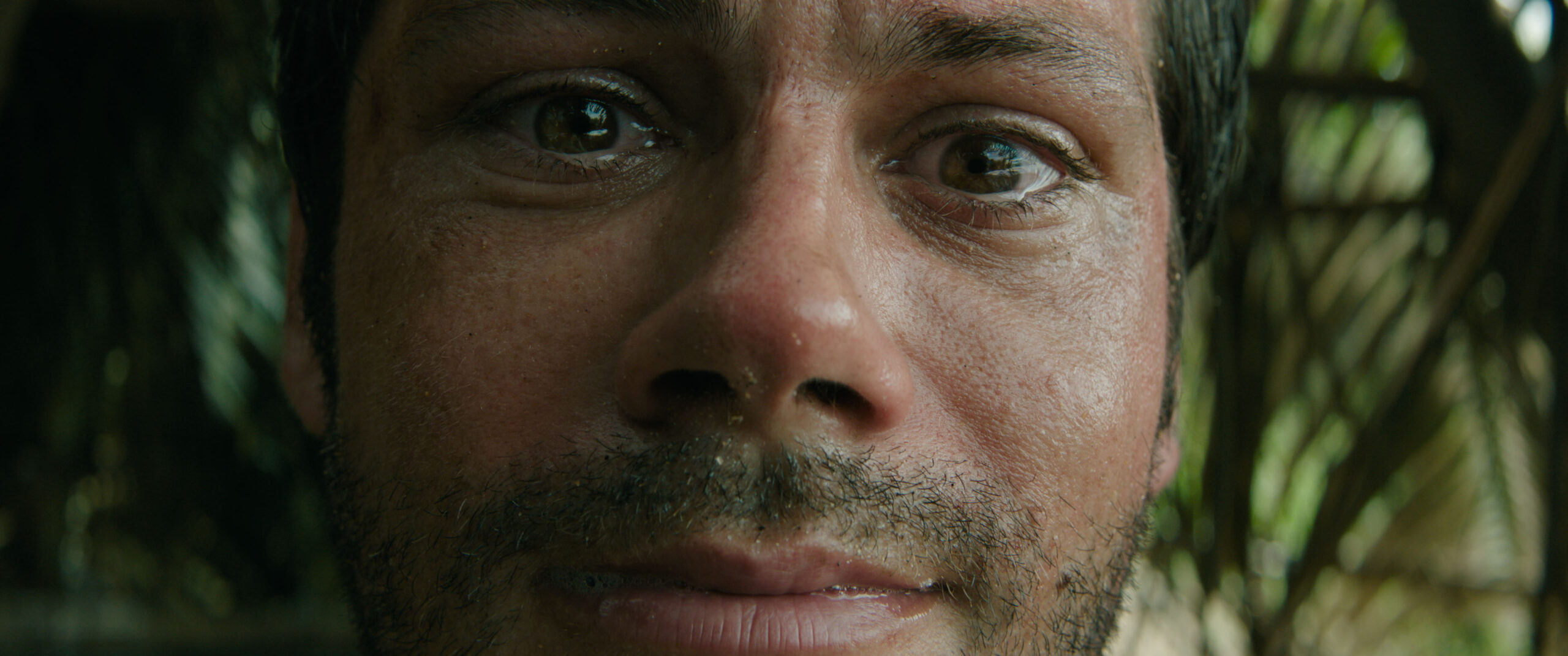
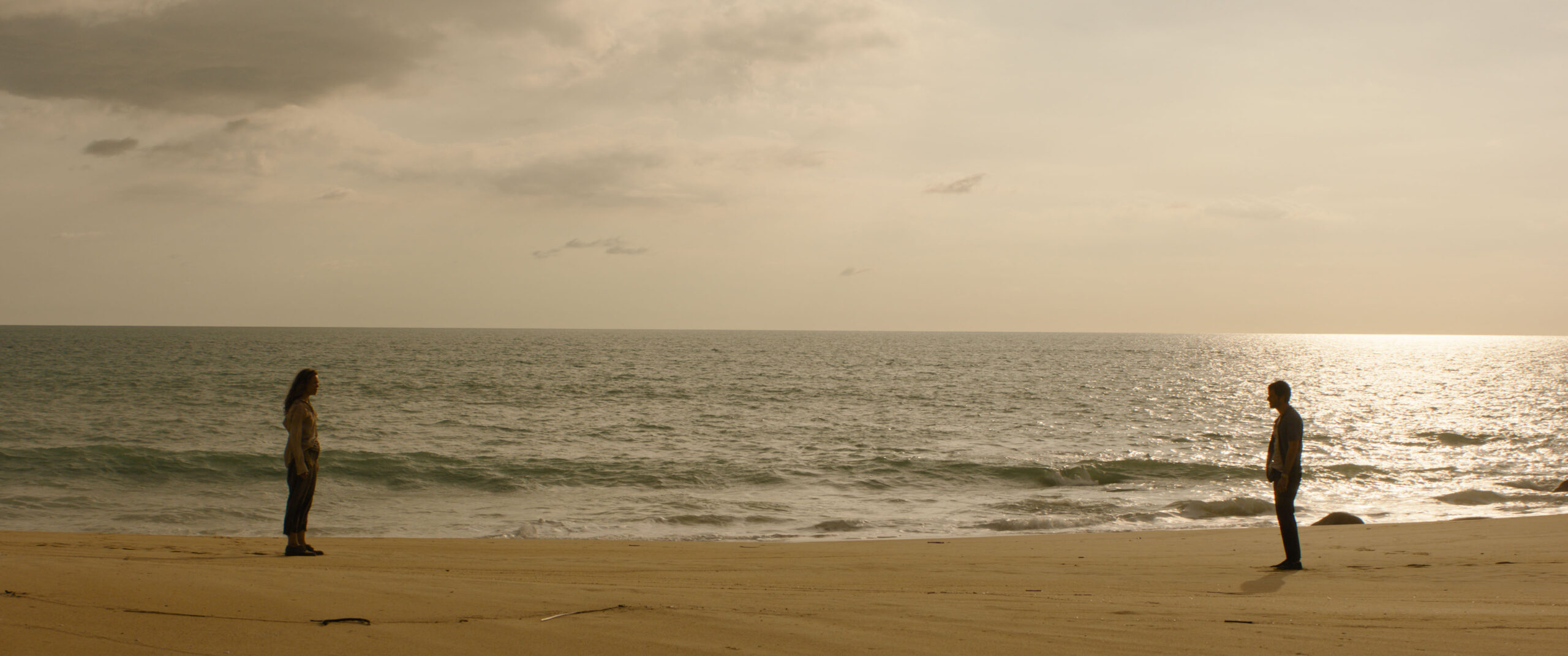
Pope’s creativity with different angles and perspectives continues to be a treasure in modern cinema. The close-ups of the characters’ faces exhibit dramatic tension and unease. Tuna fish sandwich spread and the threat of evisceration or emasculation. The two drone shots of Liddle coming upon the island and crafting a strong camp set-up are noteworthy as well. On the contrary, other camera techniques exhibit tension, e.g., Preston rushing through the jungle and a subsequent frame of the two characters on the sand with dusk on the horizon.
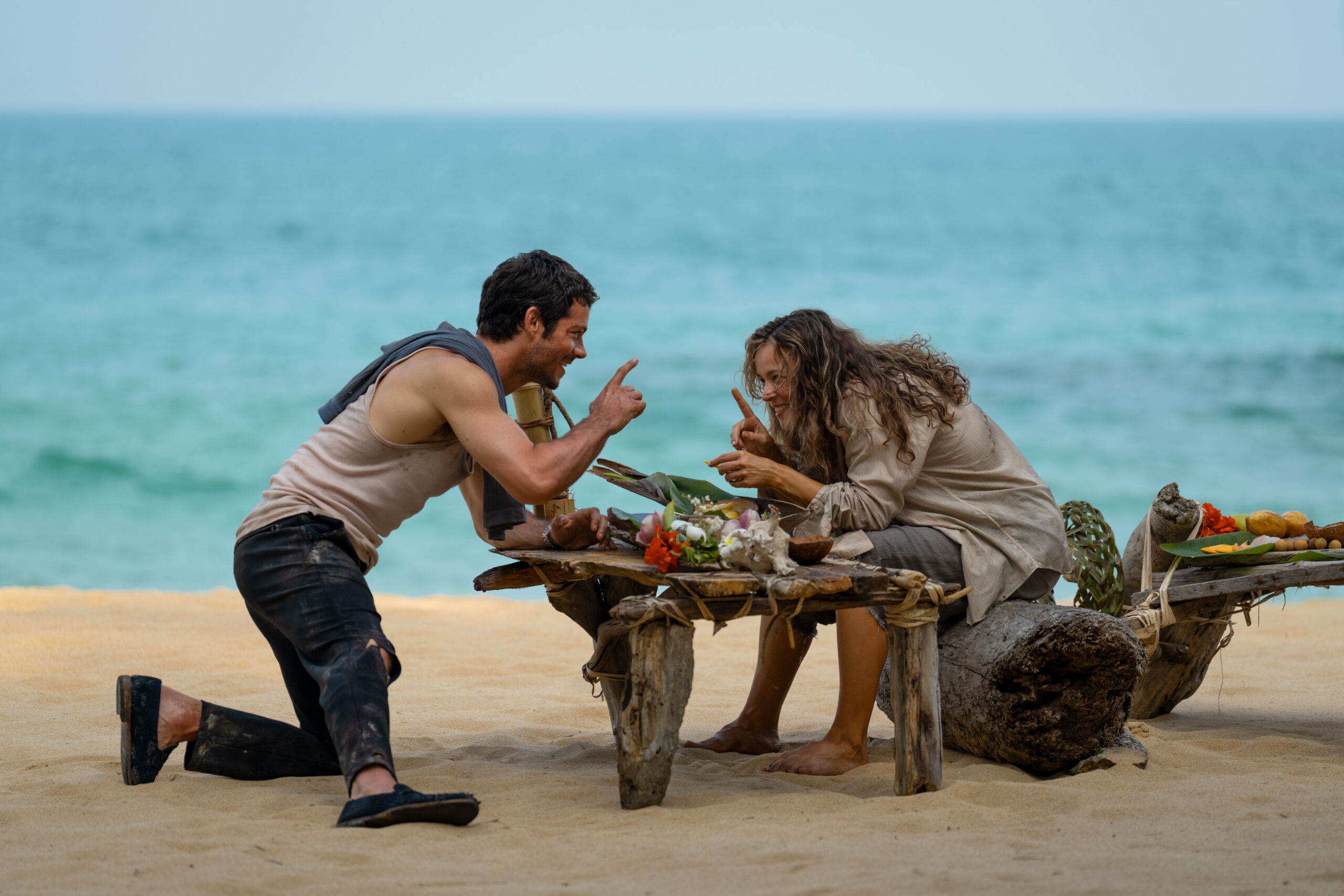
The plane crash, Liddle’s first big hunt, and the suspenseful, almost stress-inducing climax are a few of Send Help‘s better sequences. They may or may not include effective jump scares—a sort of Raimi trademark. Regardless, they are all executed to perfection with the production crew’s contributions. Surely, Ko Hong Island, the “hero beach”, as production designer Ian Gracie calls it, is Send Help‘s supporting character. Australian survival expert and stunt performer Ky Furneaux deserves so much credit for lending advice on how to create an authentic narrative. Displays of coconut shells to collect rainwater, the thatch shelter, the bamboo water filter, etc., are wise and thus laudable.
The practical and special effects are the grossest elements in Raimi-associated horror, alongside Evil Dead and Evil Dead Rise. Wild animal snot and blood, the insides of a bug or crustacean, nonstop puking, not to mention mud and Liddle’s own blood on her face—I wasn’t queasy, but they are all rough to look at. On the lighter side, the team has constructed neat elements for the film: a homemade (for lack of a better term) raft and a zombie sequence.
Making Sense of the End-Product
After a bit of ruminating, Murawski’s assemblage of edits is lovely work. His montages, fades to black, and the single delightful match cut towards the end are beneficial for storytelling purposes. It avoids making Send Help look banal, which is nicer than anything manufactured by artificial intelligence. A match cut between Preston’s fiancée, Zuri (Edyll Ismail), and Liddle nicely illustrates the bridge between surrealism and reality. More so, it can mean a metaphor for wants, needs, and desires for Preston.
Elfman’s soundtrack is all over the place, to my satisfaction. The classy score as Liddle roams the jungle with a sharpened spear and the angelic vocals playing on her next big discovery the following day are beautiful. I appreciate the rhythmic, tropical score when Preston is left to craft his own shelter by hand. Most of all, I love the thrilling score in the latter half of the film when he attempts to wrest power back from Liddle. Blondie is a potent artist in accentuating Liddle’s story. “Rip Her to Shreds” establishes scrutiny aimed at her, whereas “One Way or Another” is used to usurp control.
The only downside of Send Help that comes to mind is that the island’s facets ultimately do not work for me. The visual effects, such as the “ridge line 200 [two hundred] feet high”, impress as awkward and often distract from the rest of the film. Maybe, similar to the characters, it can represent imperfection that requires acknowledgement.
The Crew Behind Send Help
Send Help is dedicated to the late Scott Spiegel (It’s Murder, Evil Dead, Spider-Man 2, Doctor Strange in the Multiverse of Madness).
Bill Pope (Darkman, Army of Darkness, Bound, The Matrix film franchise, Spider-Man 2, Team America: World Police, Spider-Man 3, Men in Black³, Baby Driver, Alita: Battle Angel) serves as the director of photography.
Brook Rushton serves as the stills photographer. Miles Jones is the gaffer.
Bob Murawski (Army of Darkness, Sam Raimi’s Spider-Man trilogy, Drag Me to Hell, Doctor Strange in the Multiverse of Madness) serves as the editor.
Danny Elfman (Beetlejuice, Batman, Darkman, Batman Returns, The Frighteners, the Men in Black film franchise, Spider-Man, Spider-Man 2, Doctor Strange in the Multiverse of Madness) serves as the music composer.
Bill Abbott (Heat, Scream 2, The Faculty, Scream 3, Men in Black II, Spider-Man 2, Men in Black³, Doctor Strange in the Multiverse of Madness) and Denise Okimoto (Heat, Scream 2, The Faculty, Scream 3, Men in Black II, Terminator 3: Rise of the Machines, Scary Movie 3, Spider-Man 2, Men in Black³, Doctor Strange in the Multiverse of Madness) serve as the music editors.
Jussi Tegelman (Spider-Man 2, Drag Me to Hell, Doctor Strange in the Multiverse of Madness) is credited as the supervising sound editor. Anne Tolkinnen is credited as the sound effects editor.
Nancy Nayor (Darkman, The Grudge, The Grudge 2, Wrong Turn 2: Dead End, Scream 4, Piranha 3DD, the Wrong Turn reboot, Barbarian, Strange Darling, Saw X, Lisa Frankenstein, Companion) and Danny Long serve as the casting directors.
Storyboards, Effects, and Stunts
Aaron Sowd (Freddy vs. Jason, Hell Fest, Predator: Badlands) and Sam Uther are credited as the storyboard artists.
Dan Oliver is credited as the special effects supervisor.
Everett Burrell serves as the visual effects supervisor. Korey J. Cauchon is the VFX producer.
John Walton serves as the stunt coordinator. Adam Howell serves as the assistant stunt coordinator.
Bridget Burt and Mel Goh serve as the Linda Liddle stunt doubles.
Caleb Guinery serves as the Bradley Preston stunt double.
Chloë Dallimore is credited as the intimacy coordinator.
Aesthetics
Ian Gracie (Star Wars: Episode III – Revenge of the Sith, Alien: Covenant, Kingdom of the Planet of the Apes) serves as the production designer.
Damien Drew (The Matrix Reloaded, The Matrix Revolutions, Star Wars: Episode III – Revenge of the Sith, Sense8, Alien: Covenant) serves as the supervising art director.
Tanika Pratt serves as the art director. Max Nadilo is the assistant art director.
Isabella Sperling and Ruru Zhu are the set designers.
Rebecca Cohen serves as the set decorator.
Anna Cahill (Better Watch Out, Talk to Me, Bring Her Back) serves as the costume designer.
Chiara Tripodi serves as the makeup and hair designer.
Paul Katte (The Matrix film franchise, Scare Package II: Rad Chad’s Revenge, Talk to Me, Bring Her Back) and Nick Nicolaou (The Matrix film franchise, Scare Package II: Rad Chad’s Revenge, Talk to Me, Bring Her Back) are credited as the prosthetics designers.
The Cast of Send Help
Rachel McAdams (Mean Girls, Red Eye, About Time, Doctor Strange, Game Night, Doctor Strange in the Multiverse of Madness) portrays Linda Liddle, a Strategy and Planning employee at the Preston Strategic Solutions consulting firm.
Dylan O’Brien (Teen Wolf, the Maze Runner film franchise, Caddo Lake, Twinless) portrays Bradley Preston, the newly appointed CEO of Preston Strategic Solutions.
Edyll Ismail plays Zuri, Preston’s fiancée.
Xavier Samuel (The Loved Ones) portrays Donovan “Dono” Murphy, a newly appointed Vice President at Preston Strategic Solutions and a close friend of Preston’s.
Chris Pang (Palm Springs, Joy Ride, Interior Chinatown) plays Chase, an executive in Preston’s inner circle.
Dennis Haysbert (Heat, Love & Basketball, Sin City: A Dame to Kill For, Lucifer Season 5, No Exit) plays Franklin, a senior executive at Preston Strategic Solutions.
Thaneth Warakulnukroh portrays a boat captain.
Emma Raimi (Spider-Man 3) portrays River, Liddle’s colleague who works in her cubicle space.
Kristy Best plays Polly Perera. Francesca Waters plays Barbara.
Olivia Sawyer appears as a job applicant.
Brad Flett appears as Liddle’s trainer.
Nana Miya plays a flight attendant.
Anuwat Pornladawong and Benjawan Teawsomboonkit appear as caretakers.
Aaron Shore plays an office bro.
Bruce Campbell (Within the Woods, the Evil Dead film franchise, Sam Raimi’s Spider-Man trilogy, Sky High, Black Friday, Doctor Strange in the Multiverse of Madness) cameos in photographs as Bill Preston, Bradley Preston’s late father.
Performances and Character Developments
Described as “[o]utgoing but often awkward”, McAdams’s role of the female antihero seems to me a rare archetype. Michelle Pfeiffer’s Selina Kyle/ Catwoman in Tim Burton, Daniel Waters, and Sam Hamm’s Batman Returns comes to mind from the very moment I saw Liddle. This character is aware of how the world—in her case, her workplace/ Mitwelt—views her. Yet, she composes herself due to the hierarchy set in place. Conversely, Liddle understands the freedom she is given on the island. She frequently challenges Preston, to her favor.
Her descent into madness isn’t unlike the Romani woman’s in Drag Me to Hell. Then again, the circumstances around the former character’s path are not spiritually driven. Dipping into her Eigenwelt is a wise choice on the screenwriters’ end. This demonstrates both Liddle and Preston as imperfect, and as always, actions produce consequences. Their scene, wherein they converse about their respective family households around a campfire, is well-written. I especially love the absence of music and my silent theater auditorium as Liddle brushes on personal tragedy. McAdams’s screen presence is a miracle. Admittedly, I would like to see her in more thrilling projects to showcase her range.
Remarkably, O’Brien fits into the antagonist role. The closest I have ever seen him before Preston is as Roman in James Sweeney’s Twinless of last year. (That is, a character who cannot contain his anger.) While the former character isn’t a villain per se, he does believe in “every man for himself”. When Liddle washes ashore on the island, she uses her instincts to prepare fresh sushi and barbecue. Preston constantly pretends to win Liddle’s trust to achieve his wants and even tries to win the audience’s empathy. Alas, he finds himself in a fate akin to a Raimi Spider-Man antagonist. In other words, godspeed…
Final Thoughts on Send Help
Some things are going to change with you, and they’re not going to be easy.
Linda Liddle (Rachel McAdams)
With January out of the way, Send Help is a fantastic horror-thriller. It’s more or less on the same level as Nia DaCosta and Alex Garland’s 28 Years Later: The Bone Temple. Scouting for a location to shoot Raimi, Shannon, and Swift’s film and enduring the production process are admirable feats. As someone who has not yet seen a single episode of Jeffrey Lieber, J.J. Abrams, and Damon Lindelof’s Lost, perhaps this is a good gateway into that. The horror filmmaker remains brutal, and I could not ask for any different. The collaborative efforts pay off, offering hope that we can see more from the masterminds involved.
Sam Raimi, Damian Shannon, and Mark Swift’s Send Help is now playing in theaters!
For more comedy, horror, and thriller-related news and reviews, follow The Cinema Spot on Facebook, Twitter, and Instagram! Also, follow us on Letterboxd for further feature film, short film, and limited series reviews!


17 Comments on “‘Send Help’ Non-Spoiler Review – Master-Slave Dialectic Reveals Woman Is The Most Dangerous Game”