Over three years since the release of The Black Phone film adaptation, a sequel has finally made its way into theaters this month. Huge off-screen narrative developments have occurred in the few years between the 2021 film and its feature film follow-up, briefly in the spin-off segment of Shudder’s V/H/S/85, titled “Dreamkill”, but more so in this current entry. On the one hand, Black Phone 2 features uneasy adult figures with particularly rough backgrounds, including the serial kidnapper/ killer known as “The Grabber” (Ethan Hawke). This antagonist has recently stirred controversy within the public sphere for preying on young boys, albeit not in the same manner as Freddy Krueger’s egregiously exaggerated conception.
On the other hand, the younger characters have matured, now living life as teenagers in high school. The Blake siblings—Finney “Finn” (Mason Thames) and Gwendolyn “Gwen” (Madeleine McGraw)—are getting along with their father, Terrence (Jeremy Davies). Yet, they still suffer from certain lingering traumas of their shared past. Black Phone 2 allows viewers to ride shotgun in the franchise’s second chapter, especially as an improvement of its predecessor. To an extent, it impresses as a young adult novel story akin to Harry Potter or Percy Jackson. Narratively and thematically, this works brilliantly and has much to say about the world that it establishes.
Black Phone 2 is written by producers Scott Derrickson (Sinister, Doctor Strange, V/H/S/85) and C. Robert Cargill (Sinister, Sinister 2, Doctor Strange, V/H/S/85) and is directed by Derrickson.
In this review, I will discuss Black Phone 2. As this article’s title suggests, spoilers will be present.
Discussion
The more blood, the better. For the crowd…
Finney “Finn” Blake (Mason Thames)
Trouble manages to find its way back into the human psyche, sort of like when word-processing programs such as Notes App and WordPress fail to save my fleshed-out notes and/or writing. Unfortunately, it’s why I must retype my initial five hundred or six hundred words of this article.
The Black Phone fared well in extrapolating executive producer Joe Hill’s (Horns, In the Tall Grass, NOS4A2, Creepshow, Locke & Key, Abraham’s Boys) short story, “The Black Phone”. The adaptation encapsulates the loneliness of occupying spaces. That is, what the Blakes felt with Finn’s kidnapping and Gwen not being taken seriously for seeing visions. With Black Phone 2, the screenwriters feasibly blend the horror subgenres of psychological thriller, slasher, and supernatural horror. I don’t fully agree with the beats and the act structure, and the ending looks rushed. However, for what it’s worth, the film’s overall commentary is its utmost strength.
Setting the Stage
Derrickson and Cargill clearly understand young people and their cringe-worthy personalities. A shining example lies in Gwen Blake’s dynamic with supporting character, Ernesto “Ernie” Arellano (Miguel Mora). I’m averse to this dynamic only because I remember what it was like to be a teenager surrounded by other teenagers. At the same time, Derrickson and Cargill use youth as an instrument for levity. Gwen is most dedicated to the cause. Therefore, her ability to withstand bullshit even from adults is praiseworthy. Her foul mouth at her present age, combined with her knowledge of Scripture, can make her an awesome member of a debate club.
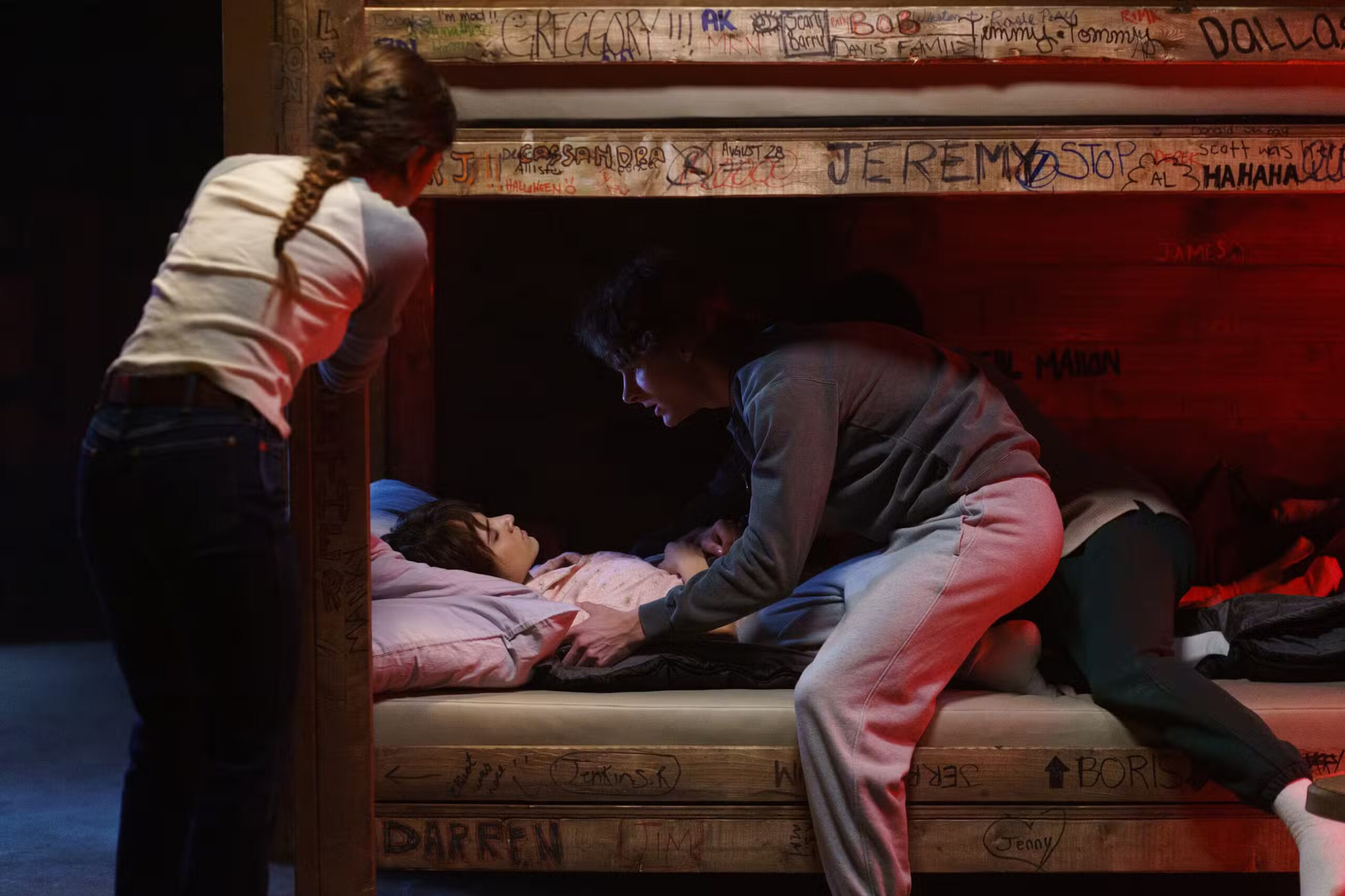
Conversely, a part of me sensed that the film gave off a whodunit vibe, provided that it’s a slasher. I had my suspicions of the adults, who surely could have been the Grabber’s accomplices. Armando (Demián Bichir), the camp supervisor, has been working at the camp the longest. The two axes and the two paddles hanging on a mess hall wall—thanks to set decorator Mary Kirkland—during his first conversation with the leading trio seemed to be a sign. Meanwhile, the camp employees, Kenneth (Graham Abbey) and Barbara (Maev Beauty), are self-proclaimed Christians who use God’s Name in vain instead of acting on behalf of His Glory. Aside from that, there aren’t any leading clues, but I just couldn’t help thinking that the Grabber could not have merely operated alone.
To me, the body count is disappointing. Hope Adler (Anna Lore) and the boys are pretty much all the kills that Black Phone 2 offers. Armando’s conversation with the Grabber via the camp office radio and the villain’s drowning of Armando edge toward a potential kill. However, that led to nothing. For a horror film, it’s dissatisfactory, but to each their own.
Narrating the Metaphysical
Knowing Derrickson as an openly Christian storyteller, I trust that the sequel would live up to expectations. It does. The director and his co-writer invest heavily in the theme of faith-based belief, mainly in the youth contending with the older generation for what is true and just. Gwen Blake’s fidelity toward Jesus Christ continues to be the purest of hearts. It’s an infectious trait that touches those who must learn what “true Christian behavior” is.
Although not as important, it wasn’t made transparent what Finn was smoking until the end of the second act, wherein it was revealed that he had been indulging in marijuana and not tobacco—or perhaps he smoked spliffs—to take his mind off of his inner turmoil. Specifying on the substance at a more proper time would help in indicating how he copes and taps into his spirituality, to solely calm his nerves or to also temporarily transcend him beyond the physical plane.
Answers to Conflict
Moreover, I love the possibility of the characters communicating with ghosts through time and space. This is an intriguing narrative device to have—Finn previously speaking to boys who met their fates in the Grabber’s basement, and now Gwen speaking with her mother, Hope. The latter two’s means of connecting in Black Phone 2 is exciting. However, this implied trope wouldn’t be executed successfully as, probably, Slaughterhouse-Five or Damon Lindelof’s Watchmen. Then again, I don’t suppose the film situates itself in that direction.
I also love the subtle message that all things change with time. The phones present in the film are crucial signs of Derrickson and Cargill transferring viewers from the late 1970s and into the ’80s. We aren’t just living in an era of rotary phones, but are now introduced to payphones and phone booths. The then-new decade calls forth an evolution in lifestyle and culture. For a subgenre film, it predates the epoché centered on Scream and what Wes Craven’s franchise opened the doors to.
In terms of resolution and revelation, the detail behind Hope’s death—which is that her suicide was framed by the Grabber for discovering his first basement victim—highlights a nuance in the narrative development. This part has closure, and I don’t believe there is anything else to create for the Blake family as a collective. Though, to reiterate, I trust in Derrickson’s ability to tells a meaningful story, so whatever happens for a third film, I am curious to know.
The Atmosphere of Black Phone 2
Shot in the Algonquin Highlands, the early ’80s Rocky Mountains location is a fascinating addition to the franchise’s Colorado setting. I can tell that the second unit director, Maggie Levin, faced difficulty in following the Grabber’s earlier victims. Second unit director of photography Ben Lichty captures the film’s rather gorier imagery, displayed even greatly in Super 8 film. It’s gutsy—no pun intended—of this team to accomplish this feat, and I would have loved to see what their plans would have looked like if it came to fruition. Regardless, the final product is fantastic in exhibiting a different “cabin in the woods”-esque narrative that relies wholly on characters in isolation.
Camp Alpine Lake carries personality, unlike Crystal Lake or, say, the Evil Dead woods. The mountain backdrops appear surreal, which is a nice way of saying that the background outlines both the literal and the metaphorical parameters of the story. Production designer Patti Podesta’s set piece of a lake frozen over is a deep symbol of characters in limbo. That is, boys whose spirits cannot cross over from the physical realm and into Heaven…or whatever it is for each of them. The lake is Derrickson and Cargill’s twisted, cold-hearted version of Neverland, i.e., a place wherein the truth of reality lies beneath the surface, in this case, ice and snow.
The best layer for Black Phone 2‘s world-building is, again, the psychological meshed with the supernatural. Taking place in the mess hall, Gwen Blake’s first main confrontation with the Grabber is a radical sequence reminiscent of A Nightmare on Elm Street. I was nearly in shock at how masterfully it was constructed. Director of photography Pär M. Ekberg leads the cinematography behind the primary sequences, and I admire everything that we see between Gwen and the Grabber.
Additional Elements
Special makeup effects designer François Dagenais and prosthetics head Tenille Shockey craft some of the bloodiest aspects I have seen in horror all year. One boy is gutted, another is dismembered, and a third’s got his head split in half. The final action sequence between the Grabber and the human characters atop the lake is mesmerizing, from Barbara’s nose broken upon hard ice, to her and Kenneth’s bloodied foreheads, to the decayed barrels of the boys’ remains.
Music composer Atticus Derrickson’s scoring and music supervisor Julie Sessing’s curation of the retro soundtrack complement the rhetorical kairos. “Another Brick in the Wall” by Pink Floyd is a rebellious-sounding track that conveys the film’s protagonists as they once again strive to conquer the Grabber despite the obstacles en route. “You Don’t Scare Me” by The 77s is self-descriptive, pointing to the state of fearlessness that the human characters must reach. Yet, what really got me close to jumping out of my seat is sound designers/ editors Luciano Vignola and Grant Elder’s inclusion of harsh noises. The ringing phone booth during the teenagers’ first night at Alpine Lake is creepy. Finn hesitates to answer the call, as if a refusal to embrace progress and heroism, and the Grabber lures him in with an unceasing ring.
The Crew Behind Black Phone 2
Black Phone 2 is based on characters from Joe Hill’s short story, “The Black Phone”.
Pär M. Ekberg serves as the director of photography.
Louise Ford (The Witch, Don’t Breathe, The Lighthouse, The Northman, Nosferatu) serves as the editor.
Atticus Derrickson serves as the music composer. Julie Sessing serves as the music supervisor.
Dan Farkas and Dylan Neely (Knock at the Cabin, Babes, Trap, Caddo Lake, Sorry Baby, Him) serve as the music editors.
Luciano Vignola and Grant Elder serve as the sound designers/ editors. Filipe Messeder is credited in the film as a sound effects editor.
Terri Taylor (the Paranormal Activity film franchise, the Purge film series, Get Out, Happy Death Day, Upgrade, Truth or Dare, Us, The Invisible Man, Freaky, The Black Phone, M3GAN, Totally Killer, The Woman in the Yard), Sarah Domeier Lindo (Truth or Dare, The First Purge, The Invisible Man, Freaky, The Forever Purge, The Black Phone, M3GAN, Totally Killer), and Ally Conover (The Woman in the Yard) are the casting directors.
Chandler Boriska is the Toronto casting associate. Zameret Kleiman is the Toronto extras casting director.
Branko Racki serves as the stunt coordinator. Gannon Racki is the assistant stunt coordinator.
In the second unit team, executive producer Maggie Levin (Into the Dark: My Valentine, V/H/S/99) serves as the director, while Ben Lichty serves as the director of photography.
Aesthetics
Ivan Moran and Joe Hagg serve as the visual effects supervisors.
Lisa Sepp-Wilson and Vera Bennett are the VFX producers in post-production.
François Dagenais (Land of the Dead, Channel Zero, Scary Stories to Tell in the Dark, Chucky Season 1, Dark Harvest) of MindwarpFX serves as the special makeup effects designer. Tenille Shockey serves as the prosthetics head.
Patti Podesta (Memento, Defending Jacob, The Black Phone, Dark Harvest, Freaky Tales, Teacup) serves as the production designer.
Michele Brady and Anthony A. Ianni are the art directors. Mary Kirkland is the set decorator.
Amy Andrews serves as the costume designer. Alima Meyboom serves as the assistant costume designer.
Colin Penman serves as the makeup department head. Alessandra Bastianoni serves as the key makeup artist.
Nathan Rival serves as the hair department head.
The Cast of Black Phone 2
Madeleine McGraw (Outcast, Robbie Ain’t Right No More) portrays Gwendolyn “Gwen” Blake.
Mason Thames (How to Train Your Dragon remake) plays Finney “Finn” Blake.
Ethan Hawke (Gattaca, Training Day, Sinister, The Purge, Predestination, First Reformed, The Northman, Moon Knight) portrays Bill “Wild Bill” Hickock, also known as the serial killer, the Grabber.
Demián Bichir (Che, Machete Kills, The Hateful Eight, Alien: Covenant, The Nun, Godzilla vs. Kong) portrays Armando, the supervisor of Camp Alpine Lake.
Jeremy Davies (Twister, Solaris, Lost Seasons 4-6, Sleepy Hollow Season 4, Dark Harvest) reprises his role as Terrence Blake, Gwen and Finney’s father.
Miguel Mora plays Ernesto “Ernie” Arellano, the younger brother of Robin Arellano, one of the Grabber’s victims, and a close friend of Finney’s. The actor also portrayed Robin Arellano in the first film.
Arianna Rivas portrays Mustang.
Anna Lore (Doom Patrol Season 1, Into the Dark: My Valentine, They/Them, Final Destination Bloodlines) portrays Hope Adler, the matriach of the Blake family.
Graham Abbey and Maev Beaty portray Kenneth and Barbara, employees at Camp Alpine Lake, respectively.
Julien Norman plays a younger Wild Bill.
Simon Webster, Shepherd Munroe, and Chase B. Robertson portray Felix, Calvin “Cal”, and Spike, three young male victims of Wild Bill whose ghosts are trapped in Camp Alpine Lake, respectively.
Jacob Moran reprises his role from the first film as Billy, one of the Grabber’s victims.
Performances and Character Developments
Undoubtedly, McGraw is the sequel’s most valuable player, showcasing incredible delivery as Gwen Blake. The character is evidently family-oriented, a quality expanded from the prior film. Her sympathies for her brother’s experiences, along with her empathy for her mother’s experience, are enough to suggest that this is someone with something to live for. Gwen is the main driver for the sequel, and as a female lead, I appreciate the larger role that McGraw is given this time around. She’s definitely multi-dimensional beyond solely having visions and a love interest. To add, her self-understanding through self-education of contemporary psychology, e.g., writing by late psychiatrist Carl Jung, is a big win. McGraw is excellent at oscillating between Gwen’s despairing self-doubt and her unrelenting courage. Simply put, Gwen Blake is supernatural horror’s greatest final girl in a while, perhaps since Tina Shepard in Friday the 13th Part VII: The New Blood.
In turn, Thames sits in the passenger’s seat as Finn Blake, who suffers as the Grabber’s sole surviving victim. During the first film, he learned survival skills from the boys who had been in the basement before his arrival. Now, he must learn not necessarily to their shed lessons of defense and offense, but instead to let go of his anger. Due to this specific internal conflict, Finn steps back a bit as a leading figure and has become a lost soul with a triumphant spirit waiting to return to the light. Arguably, he is a solid representation of the other boys who reside in liminal spaces. Thames portrays the lifeless shell of who Finn was at first—a kid who sought protection, attempted to defeat antagonism, but is presently and ultimately defeated by it.
Is Hawke the Next Englund?
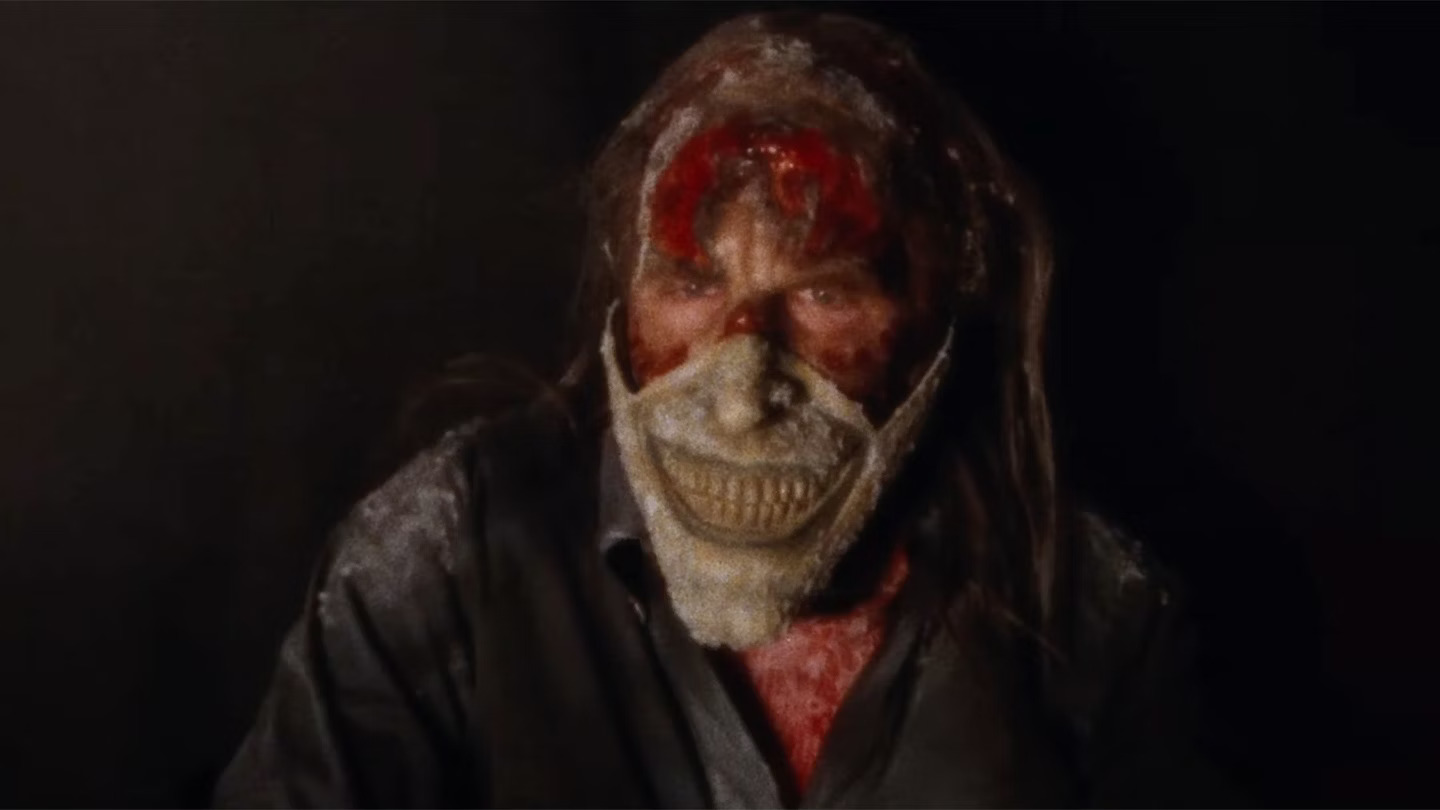
Hawke keeps the mask of vengeance on as the Grabber for the majority of the film. I believe it’s done similarly to Bruce Wayne as Batman in Dark Victory, i.e., to demonstrate a state of monstrosity that deviates from the human figure. With that said, in this case, Hawke’s character is, of course, intended to be depicted as a monster and not the hero. His line deliveries in scenes—e.g., “I want to hurt you in ways that you can’t even imagine. You will pay for what you did to me. You made me kill my brother…”/ “[Hell] take[s] the best parts of you and leave[s] only the worst. I am a bottomless pit of sin.”—take the cake as it is.
Still, the icing on that cake might be the character’s visual appearance. Here, Hawke doesn’t come across as the suave male renowned in Before Sunrise or The Purge. Nor is he the nervous savior a la Jake Hoyt in Training Day. The Grabber’s mask is a theatrical means of putting on a new persona. Derrickson’s special makeup effects team works wonders for the climactic reveal. That is, behind his façade is an inhumane body after all. It’s disturbing and gross; what’s not to love?
Final Thoughts on Black Phone 2
…death is just a word. …fear is just the warm-up.
Bill “Wild Bill” Hickock/ “The Grabber” (Ethan Hawke)
Black Phone 2 isn’t the year’s quintessential horror picture. However, it will more likely than not age tremendously for the genre fans. The film is a mandatory watch and a religious event, considering the moral panic and disarray in today’s world. It won’t be everybody’s cup of tea, but it’s absolutely up my alley. The Black Phone franchise has gone a long way since its source material; here’s to an everlasting future!
4.5/5 stars
Scott Derrickson and C. Robert Cargill’s Black Phone 2 is now playing in theaters!
For more horror and thriller-related news and reviews, follow The Cinema Spot on Facebook, Twitter, and Instagram! Also, follow us on Letterboxd for further feature film, short film, and limited series reviews!
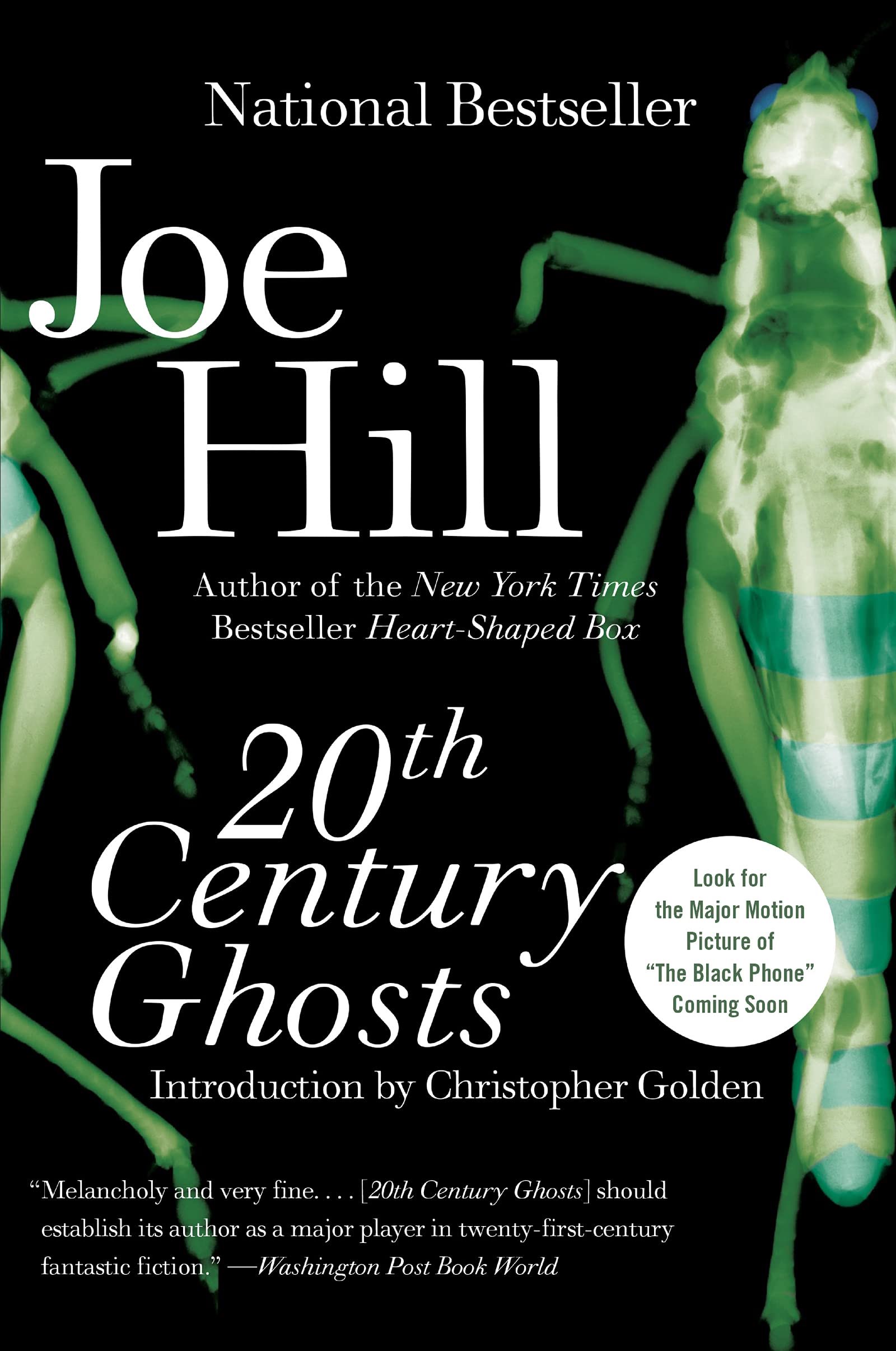
For context on the source material, pick up a physical copy of 20th Century Ghosts by Joe Hill via our Amazon Affiliates link!