Following Horns and The Black Phone, the newest horror feature based on a story by Joe Hill has arrived, this time from RLJE Films and Shudder. Despite its subtitle explicitly stating what can be expected from the narrative, Abraham’s Boys: A Dracula Story is an austere adaptation that transcends Bram Stoker’s renowned gothic novel. Beyond the stories of vampires, the film itself is more a deep, human account of madness and phantasms as the lasting result of phenomenal traumas. Filmmaker Natasha Kermani takes seventeen pages of prose and expands them into an eighty-nine-minute epic. Ultimately, this feature focuses on an immigrant family’s dangerous stagnation in clinging to the old ways of a past that no longer exists while witnessing the developments of a new world.
Abraham’s Boys: A Dracula Story is written and directed by Natasha Kermani (Lucky, V/HS/85).
In this review, I will discuss Abraham’s Boys: A Dracula Story. As this article’s title suggests, no spoilers will be present.
Shudder’s Abraham’s Boys: A Dracula Story Synopsis
According to IFC Films/ Shudder, here is the official synopsis for Natasha Kermani’s horror film adaptation, Abraham’s Boys: A Dracula Story.
Max and Rudy Van Helsing have spent their lives under the strict and overprotective rule of their father, Abraham. Unaware of his dark past, they struggle to understand his paranoia and increasingly erratic behavior. But when they begin to uncover the violent truths behind their father’s history with Dracula, their world unravels, forcing them to confront the terrifying legacy they were never meant to inherit.
IFC Films/ Shudder
Discussion
With the aim of Abraham’s Boys being the redefining of heroes and monsters—as per the director’s statement in the film’s official press notes—, Kermani already succeeds in reinvigorating a Joe Hill narrative. This isn’t the first time the short story has been adapted to film. A short film was made in 2009, but I don’t believe it’s seen the light of day. For those who do not already know, Joe Hill is the older son of Stephen King, whose whole repertoire is centered on the thesis argument, “Well, what if humans are more monsters than monsters themselves?” This year, that idea has been applied to Osgood Perkins’s The Monkey and Kate Siegel and King’s animated short, Lily. For Hill, genre fans have already seen this idea play out in Scott Derrickson and C. Robert Cargill’s The Black Phone.
Bringing “Abraham’s Boys” to Life
This film would end so much sooner if it only replicated Hill’s beats. Yet, I am utterly enamored by Kermani’s ability to spearhead this production. The filmmaker imagines a reality post-Dracula and, therefore, a post-traumatic world. That can be quite relatable given the nature of history today. Viewers don’t have to see the world at large. Rather, they must believe that such a one exists, that there are dire consequences to not dying a hero. Similar to Kermani’s prior feature, Lucky, Abraham’s Boys primarily focuses on a one-location setting, in this case, Central Valley, California, in 1915. This year is a nice midpoint between the founding of the Ford Motor Company and the end of the American women’s suffrage movement.
Given what is known about not just Hill’s short story but Dracula’s mythology and world history as well, Kermani has a lot of material to work with. The incorporation of cartography and the construction of the railroad system help lend historicity to the film’s context. Abraham Van Helsing (Titus Welliver) and his family are situated in a new environment away from Europe. Clearly, this sets up an inventive statement on immigration and occupants’ dilemma to either reject tradition and embrace modernity. What are people’s reasons for moving away? Alternatively, what is it they are moving from?
The adaptation of the source material, then, is radical. The film borrows important quotes and plot points and recontextualizes everything about Abraham Van Helsing and his family. Max (Brady Hepner), the older son, struggles to study mathematics instead of English Grammar, and the boys is never shown going to school. Two crucial rooms in the home are more directly connected in the film. Kermani’s screenwriting and direction are the tip of the iceberg, showcasing just why this Shudder film is perfection to me.
Monstrosity
I would argue that this creative follow-up to Dracula is more of a Gothic tale than a horror narrative. Although, Kermani skillfully combines different pieces together that it is what it is. Late literature scholar Allan Lloyd-Smith deconstructs the former movement masterfully. In his critical text, American Gothic Fiction: An Introduction, he describes the uncanny as unhomely: “The house, not the castle, becomes the site of trauma; its terror deriving from the familiar inmates instead of some external threat, and its terror therefore what Poe called a terror of the soul” (75). Call it survivor’s guilt, but it’s fascinating what happens when Kermani builds onto a story that builds onto a Bram Stoker tale. Furthermore, Lloyd-Smith writes that domestic Gothic is “intimately bound up with the idea of the house, gender, and the family, which becomes, through metaphor, a way of externalizing the inner life of fictional characters” (102-103).
Now, there are different definitions behind the term “monstrosity”. In Chapter 2 of British academic Chris Baldick’s In Frankenstein’s Shadow: Myth, Monstrosity, and Nineteenth-century Writing, titled “The Politics of Monstrosity”, the purpose of monsters are interpreted as “to reveal visibly the results of vice, folly, and unreason, as a warning to erring humanity” (10). What many traditionally know as monsters are the aesthetically deformed and grotesque creatures of the world. In the political sense, Baldick also points to a governing body or state. France’s tyranny during the French Revolution or the current existence of a capitalist America are solid examples of this. At the same time, monstrosity is embodied at the individual level, hence King and Hill’s thesis argument.
Abnormality
Better yet, French philosopher Michel Foucault’s Abnormal: Lectures at the Collège de France, 1974-1975 breaks down the monster into three figures. The first figure is referred to as “the human monster”, examined closely by nature and society’s established laws. Foucault states: “[T]he monster’s power and its capacity to create anxiety are due to the fact that it violates the law while leaving it with nothing to say” (56). In this light, criminals—including murderous entities—can be seen as monsters. However, the little paradox here is that laws are fixed by governments, which are also comprised of monsters.
Foucault refers to the second figure as “the individual to be corrected”, examined by the family environment or relative institutions. In Abnormal, the individual is “a kind of familiar, everyday obviousness that renders him immediately recognizable; but he is so familiar that we do not have any definite evidence that an individual is this character” (58). Akin to King’s Carrie and The Shining, Hill’s “Abraham’s Boys” and its film adaptation are stories about broken families, and they are broken because someone within the family has been broken.
The last figure is referred to as “the masturbator”, whose body is examined by parents, brothers and sisters, and psychological professionals. The sins of this figure are practiced within private space. Foucault defines their actions as “the universal secret shared by everyone but disclosed to no one [and that which] all possess that never emerges into self-consciousness or universal discourse” (59). In the Gothic household, there is a deep-rooted trauma that cannot be dissuaded, and Kermani directs that intelligently.
The Beauty in A Dracula Story
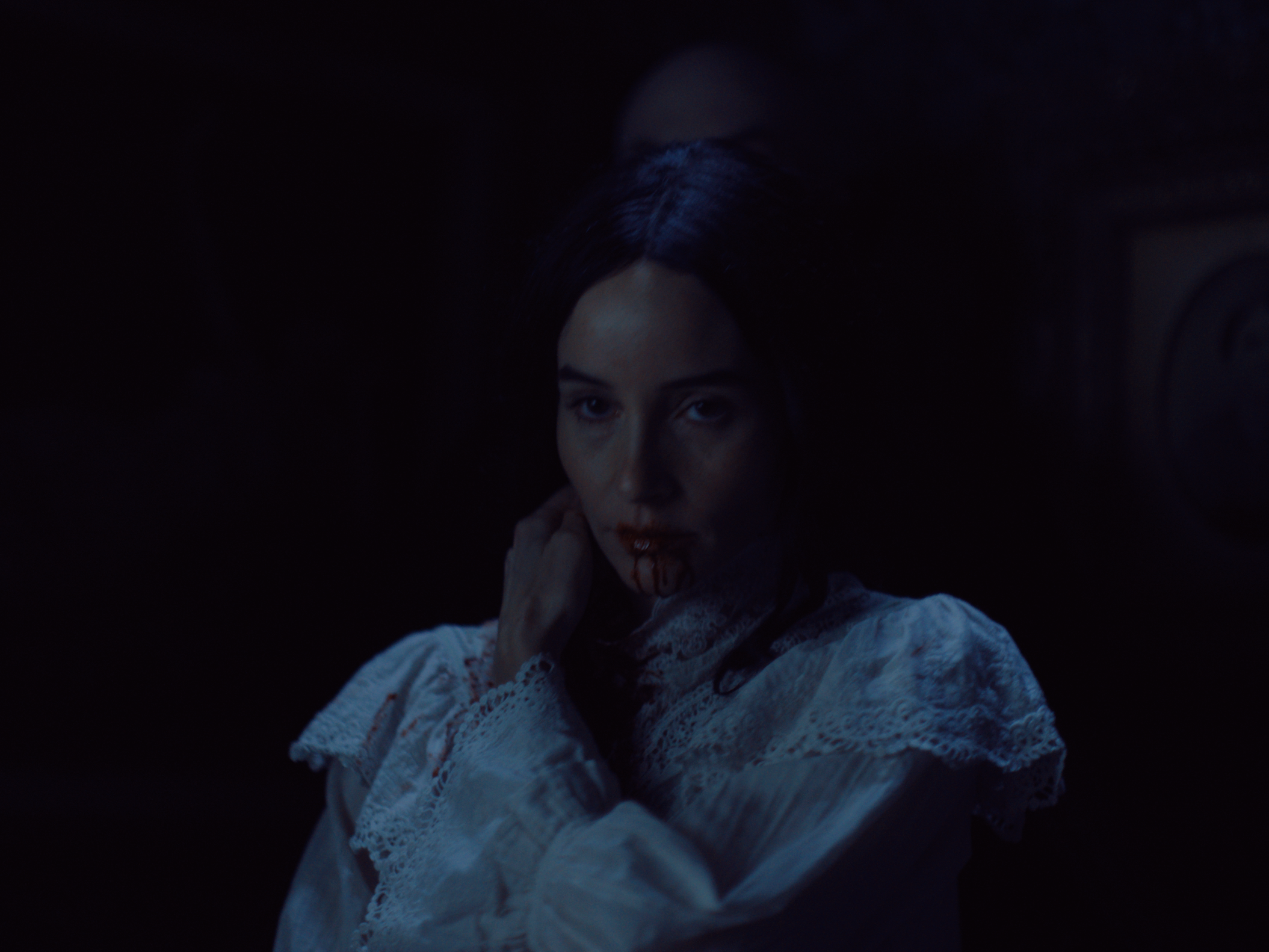
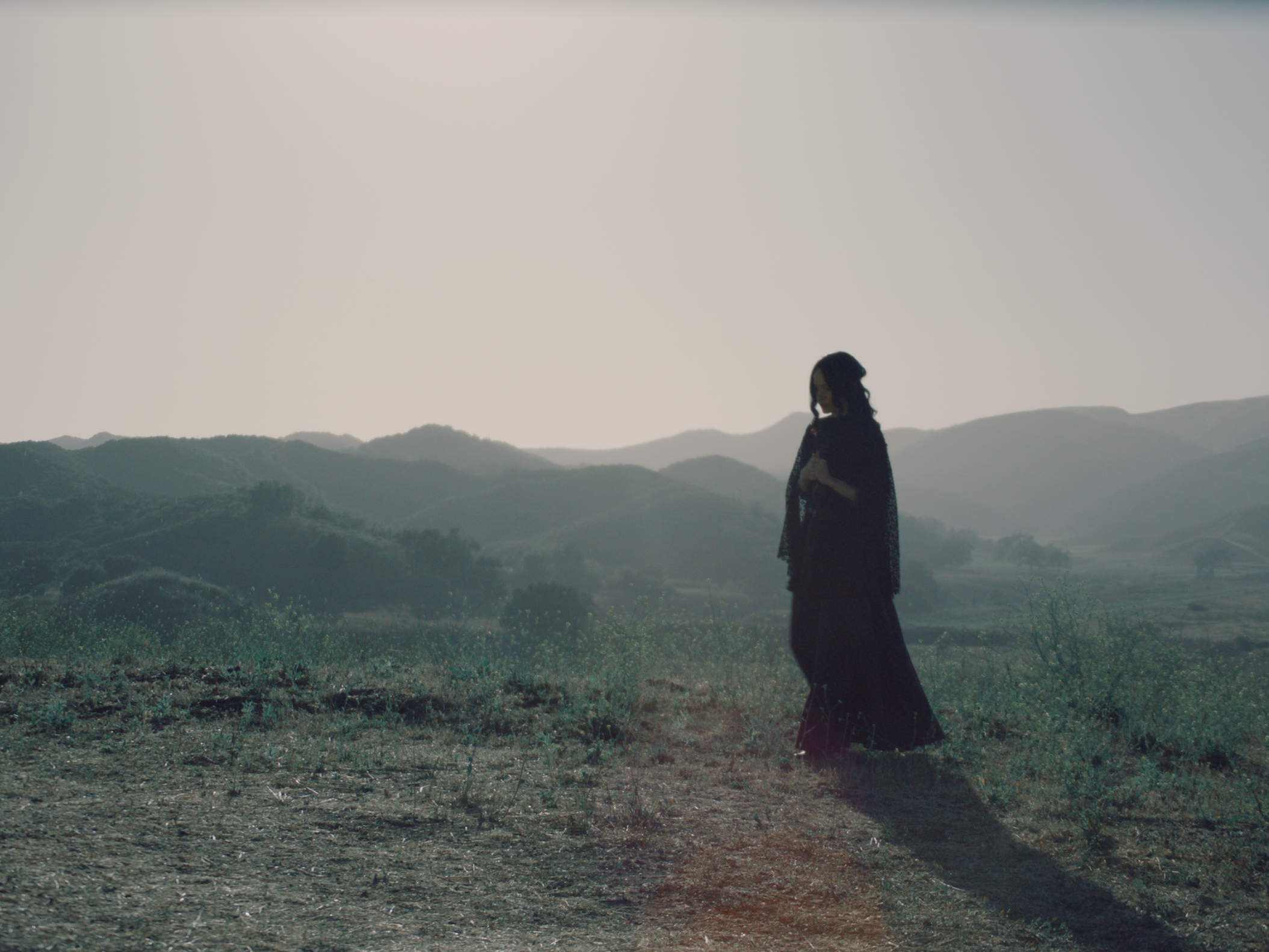
Director of photography Julia Swain’s 4:3 aspect ratio is a defining element for this Shudder film. Her continuous shots of Abraham Van Helsing’s arrival at home are strict in tone. The cinematographer has a way with centering the frame on various characters. Thanks to set decorator Fiona Jett Robinson’s placement, one panning shot from a Van Helsing family member to a specific piece of bedroom furniture provides an excellent clue as to whether delusions are justified. Overall, Swain’s images of the Californian greenery, scenery, and characters metamorphise the idea of uncanny valley, which is a feasible perspective for the sake of the film.
Editor Gabriel de Urioste’s assemblage of cuts may not be perfect for everyone. However, they matter in certain moments, e.g., the cross cut of Mina Van Helsing (Jocelin Donahue) watching Max chop wood outside the kitchen window.
Production designer Steven Cirocco’s set pieces—mostly of the Van Helsing farming estate, along with the areas of land outside of it—are brilliant work. This is enhanced with Swain’s shots captured inside and outside the Van Helsing home. Particularly, some fantastic, picturesque angles here seemingly call back to cinematographer Hoyte van Hoytema’s work on Jordan Peele’s NOPE. The framed calotype photograph of Mina in Amsterdam is a great prop, bringing broken shards of glass in the shape of fangs from page to screen. The film’s treatment of the dead comes with awesome special effects, such as decapitated heads, one apparently with a ball of garlic stuff in its mouth.
Music
Music composer Brittany Allen’s original soundtrack is one for the books. The fine instrumental in the opening scene sets the narrative off right. Kermani’s repetitive strums on the violin offer curiosity and wonder, especially in one scene where blood comes down like drips. A playful tune sounds as Max and his brother, Rudy (Judah Mackey), play catch with a football. I think that’s just funny. Allen’s angelic vocals as Abraham and his boys set up defenses around the house are just as wonderful.
I love the suspicious score when outsiders Elsie (Aurora Perrineau) and Eddie (Corteon Moore) come onto the Van Helsing property. It gives off the impression that the threats to the family could be real and that actual vampires live and breathe. The Wild Western-like score paired with Allen’s vocals as we see Max be himself at home or in a heroic mood is magnificent. I also love the nightmarish, chilling score as Max investigates the belly of his home at night. As Swain frames Mina pacing back and forth with the hills in the background, the score sounds intense. Even more intense is the early-20th-century creature feature scoring as potential vampires are buried. The suspenseful score as Swain closes in on a tree stump akin to Sam Raimi’s The Evil Dead seals the deal on the whole film.
The Crew Behind Abraham’s Boys
Abraham’s Boys is based on the short story of the same name by executive producer Joe Hill (Horns, NOS4A2, The Black Phone).
Julia Swain (Lucky, The Wrath of Becky, V/H/S/85) serves as the director of photography. Cole Pisano serves as the gaffer.
Gabriel de Urioste serves as both the editor and the publicity photographer.
Brittany Allen (Jigsaw, The Boys Season 1, Two Sentence Horror Stories, American Horror Stories, Dexter: Original Sin) serves as the music composer. Allen does the piano and vocals, and Kermani plays the violin, while Jesse McGinty plays the horns.
Glenn Irish serves as the sound effects editor.
Kendra Clark and Helen Geier serve as the casting directors.
Wuta Digital and Christopher Diaz serve as the visual effects artists.
Dalton Simons serves as the stunt coordinator. Tessa Anderson, Christopher Troy Gonzalez, Jeremy Rivette, and Matthew Quinn are the stunt performers.
Aesthetics
Steven Cirocco serves as the production designer. Fiona Jett Robinson serves as the set decorator.
Abbie Martin (V/H/S/Beyond) serves as the costume designer.
Mayera Abeita, Amber Bailey, Melissa Eastwick, and Shannon Trigger are the hair and makeup artists.
Patrick Magee (Jurassic Park III, V/H/S/94, V/H/S/99, V/H/S/85, V/H/S/Beyond) serves as the special effects department head.
Chanell Butts, Timothée Currence, Megan Dupuy, Kendall Norton, Edward Olson, Karissa Parks (V/H/S/Beyond), Mindy Pedrick, Chase Stiles, Katie Vernon (Magic Funhouse, V/H/S/99, V/H/S/Beyond), and Savannah Young serve as the special effects artists.
The Cast of Abraham’s Boys
Executive producer Titus Welliver (Deadwood, Lost, The Town, Bosch, Castlevania Season 4, Batman: The Long Halloween, Bosch: Legacy) portrays the eponymous character, Abraham Van Helsing.
Joceline Donahue (The House of the Devil, Insidious: Chapter 2, Doctor Sleep) portrays Mina.
Brady Hepner (The Black Phone, The Holdovers) and Judah Mackey portray the titular boys, Max and Rudolf “Rudy”, respectively.
Aurora Perrineau (Truth or Dare, Into the Dark Season 1, Ava DuVernay’s When They See Us, It Takes Three, HBO’s Westworld Season 4, Charlie Covell’s Kaos) portrays Elsie, a cartographer and an original character to the story.
Corteon Moore plays Eddie, Elsie’s brother and a railroad worker.
Fayna Sanchez portrays a woman named Ada.
Larry Cedar (Lucky) portrays Father Leon.
Jonathan Howard portrays Arthur Holmwood from Bram Stoker’s Dracula.
Paul Wong plays a survey captain. Nick Epper plays Henry, a fellow railroad worker and colleague of Eddie’s.
Forrest McClain portrays “The Pale Man”.
Dalton Simons appears as a man on horseback.
Performances and Character Developments
Titus Welliver’s accent in the titular role of Abraham is believable. While Hill is more concerned with the prose of his speech, Kermani concentrates on how Abraham asserts himself as a patriarch. The character’s demeanor towards Max—whether scolding him for responding in a stupefying manner or berating him for defying instruction—is a great mirror to the source material. Welliver’s line delivery is also brilliant, namely in Abraham’s weary speech about the family’s safety and his vendetta against vampires. This makes for an even better performance when an old face enters the picture. Here, Welliver presents himself as a harsh Don Corleone-type figure.
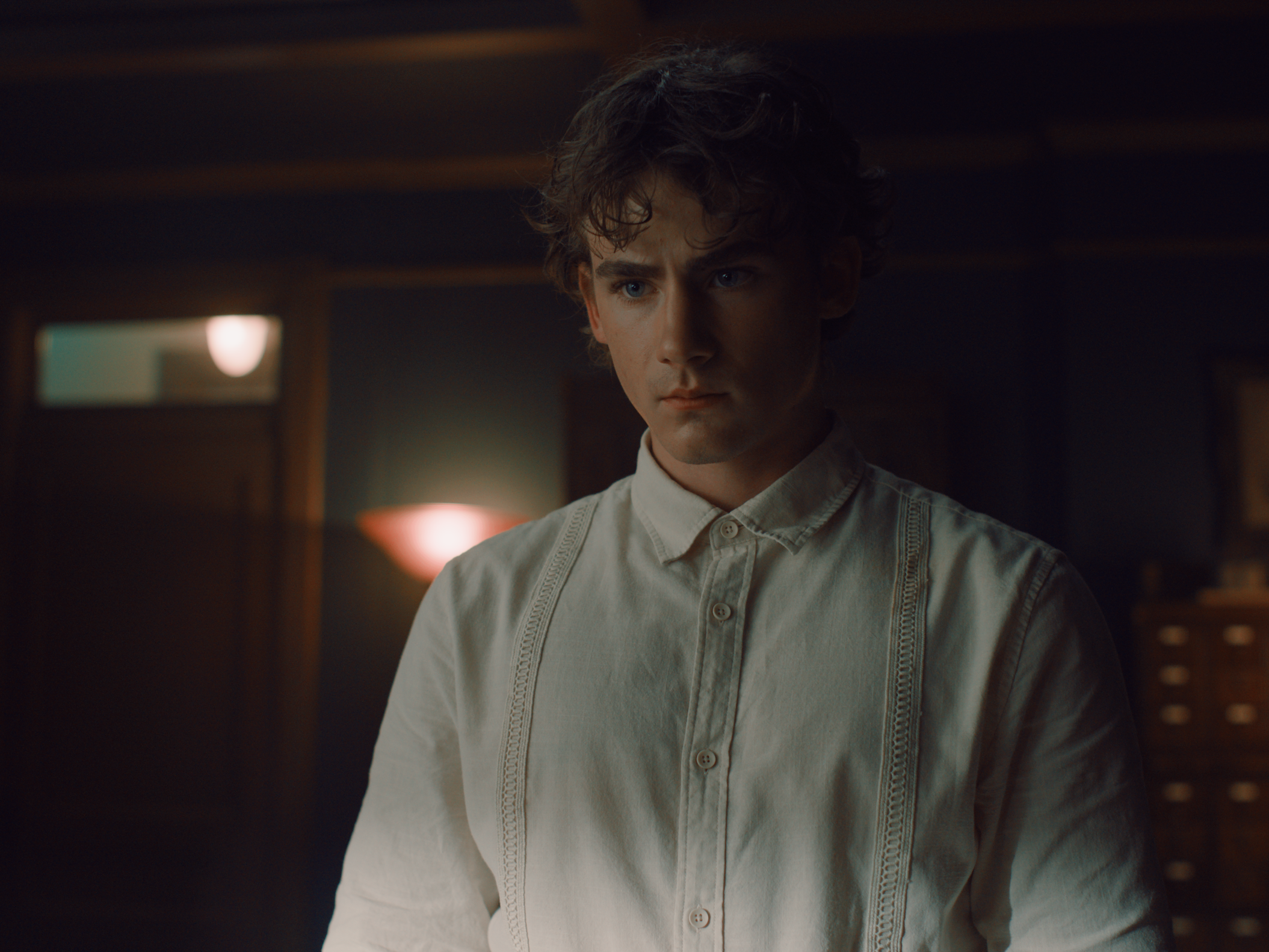
Brady Hepner appears to portray the role of Max with ease. Unlike the source material’s character, Kermani’s version of Max possesses no ill will towards Rudy. This relationship is a good sign. It holds a down-to-earth charm and is even genuinely laughable in the little things. For example, Rudy pretending to smoke out of a pipe or screaming in a high pitch.
For a character with speaking lines, Jocelin Donahue’s role of Mina has an almost mesmerizing delivery. The film’s description of her time in the presence of Dracula, and even as the camera zooms out from her face to capture her entire upper body, is amazing. The actor is softer spoken in this role than she is in Ti West’s The House of the Devil. Seeing Donahue as Mina shows an evolution in her career, as she still portrays prey to demons.
An Original Character
With a few major television roles, a few horror flicks, and an underrated rom-com under her belt, Aurora Perrineau has honed her craft in acting. Blumhouse’s Truth or Dare and the Into the Dark pilot, titled “The Body”, gave the performer some awkward deaths (and frankly, Dorothy didn’t deserve to die). Yet, with Abraham’s Boys, Kermani offers the actor a genuinely potent and valuable role. Elsie isn’t completely a foil to Max, but their milieus and movements make noteworthy parallels. Interestingly, Swain centers the camera on Max or Elsie as one or the other departs from the Van Helsing household. More so, their sense of responsibility over a loved one is remarkable on the screenwriter’s part.
From costume designer Abbie Martin’s outfitting and the hair and makeup team’s help with the actor’s appearance, Elsie impresses as the adventurous type, somebody who means business. The character has a satchel slung to the side and a hat reminiscent of Harrison Ford’s Indiana Jones. One plot hole that I’ve noticed is that Elsie offers her services to the family, but this is never fulfilled. This bit sucks—pun intended—to see, given her aspiration for larger-than-life accomplishments. Then again, I feel that room is made in the final few scenes with the younger characters to pave the way for a sequel.
Suffice it to say that Perrineau has the makings of a movie star. Sure, Westworld and Kaos are television series. However, they’re spearheaded by directors and screenwriters who understand what quality storytelling is enough to make them cinematic. Briefly, the actor steps into the scream queen realm. Accordingly, this gives viewers a taste of what more she can contribute to the horror genre.
Final Thoughts on Abraham’s Boys: A Dracula Story
The world is getting smaller, closing in on us, and as the New World grows more populous, they follow, like rats…
Abraham Van Helsing (Titus Welliver)
For a Joe Hill adaptation, Abraham’s Boys: A Dracula Story takes the cake. Sure, Derrickson and Cargill’s The Black Phone is quite the entrée. However, I would be remiss if I were not to say Kermani’s film is satisfactory for certain cinephiles’ tastes. Her attention to the original details is meticulously precise. She substitutes the Kutchner family in Hill’s short story for Elsie and Eddie. In doing so, I feel that there is promise in what the context suggests. In my final analysis, this is undoubtedly a horror feature film worth paying admission price (or a Shudder subscription fee) for!
5/5 stars
Abraham’s Boys: A Dracula Story comes to theaters this Friday, July 11th!
For more horror-related news and reviews, follow The Cinema Spot on Facebook, Twitter, and Instagram! Also, follow us on Letterboxd for further feature film, short film, and limited series reviews!
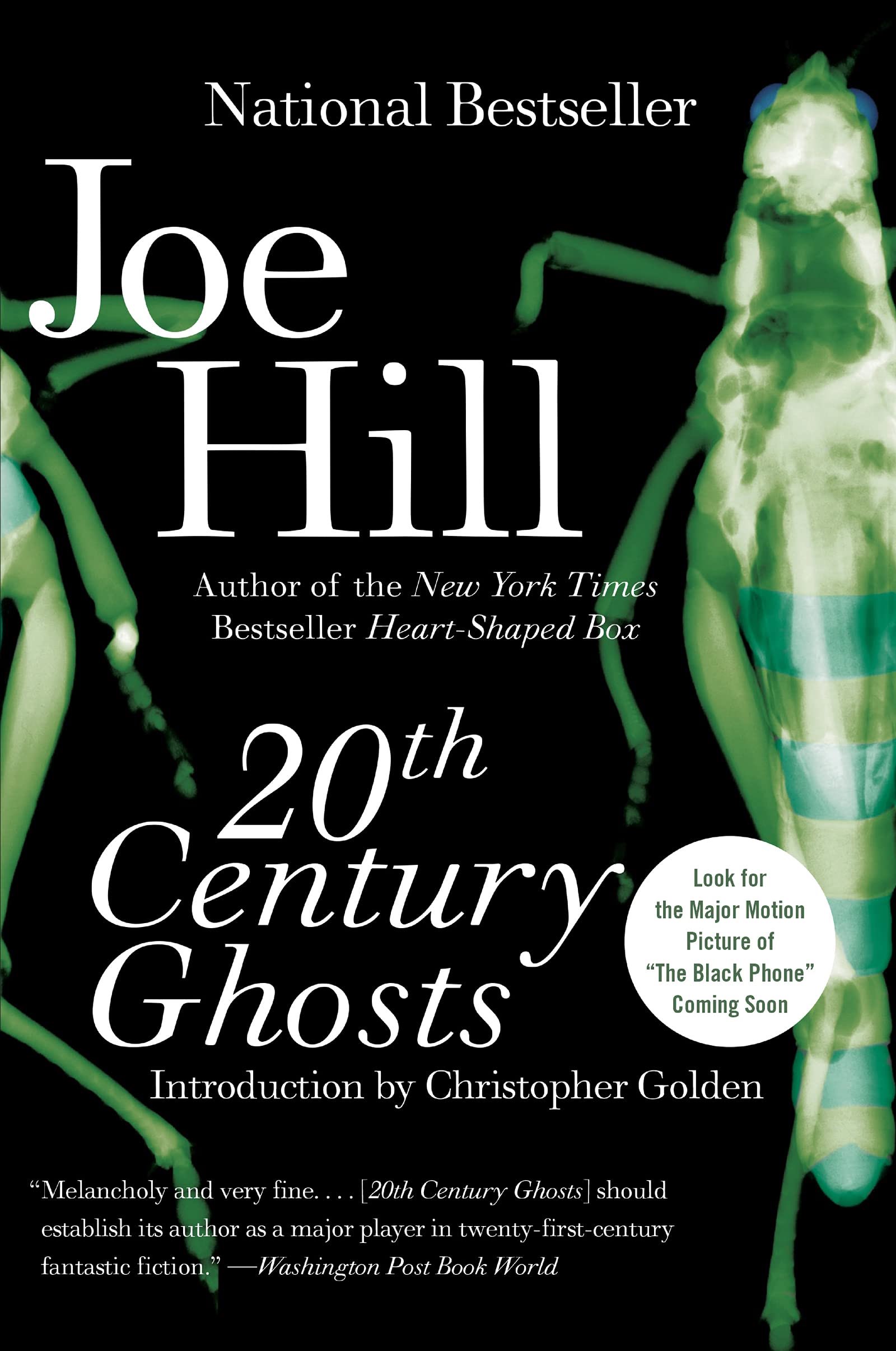
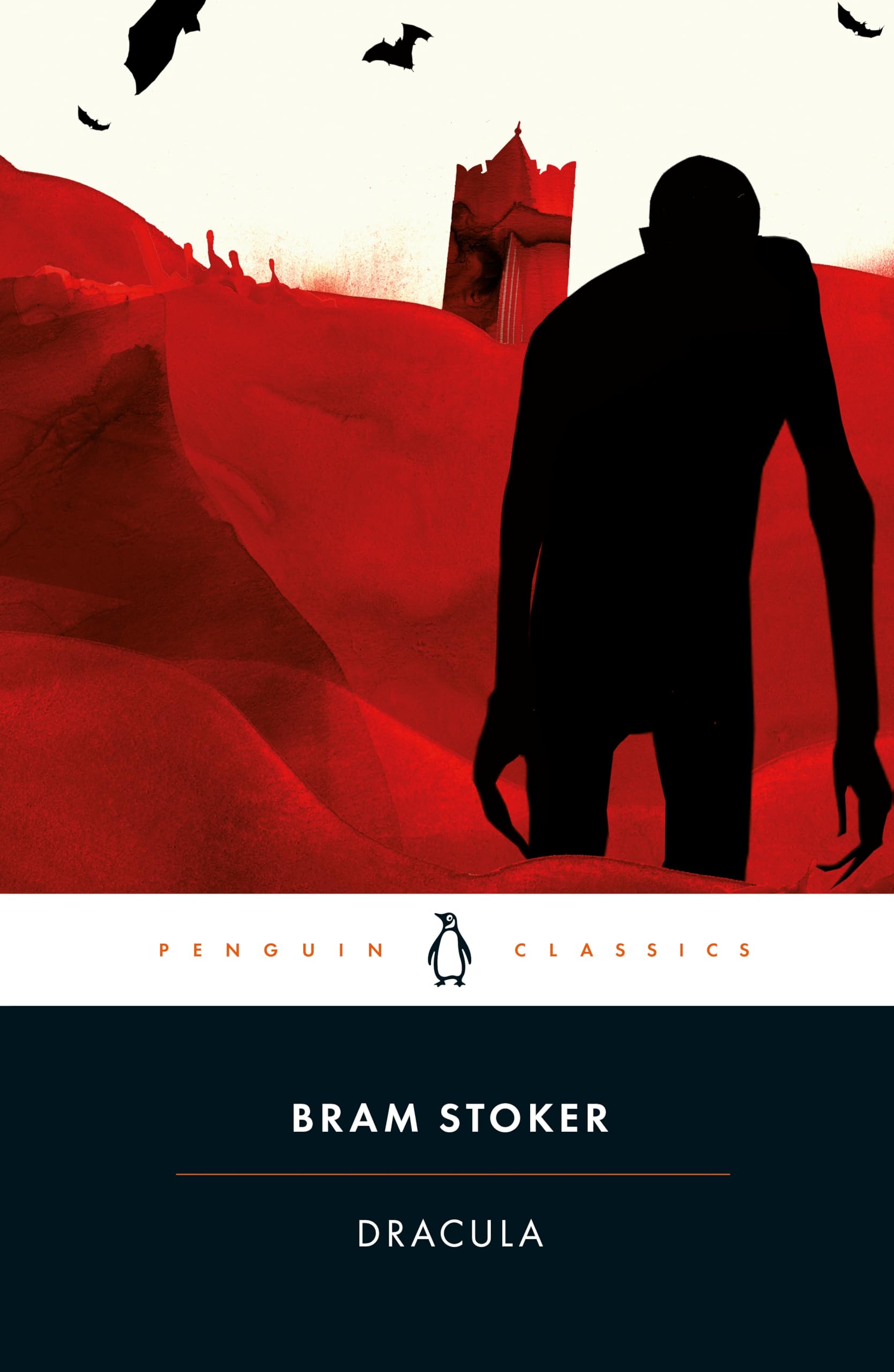
Pick up a physical copy of 20th Century Ghosts by Joe Hill via our Amazon Affiliates link! Additionally, for further context, we recommend picking up a physical copy of Bram Stoker’s Dracula!