
Throughout history, governments have censored the voices of people they deem dangerous to their hold on power. Roisin Agnew’s experimental comedy documentary Tribeca short film, The Ban, provides insight into one particular instance of this during the conflict in Northern Ireland. In the late 80s, UK Prime Minister Margaret Thatcher introduced a broadcast ban that prevented the media from using the voices of the IRA and its associated political party, Sinn Féin. So broadcasters had to hire actors to dub over the affected parties. Directed and written by Roisin Agnew, The Ban examines the reality of this ban and invites the viewer to draw comparisons to today’s climate.
Discussion
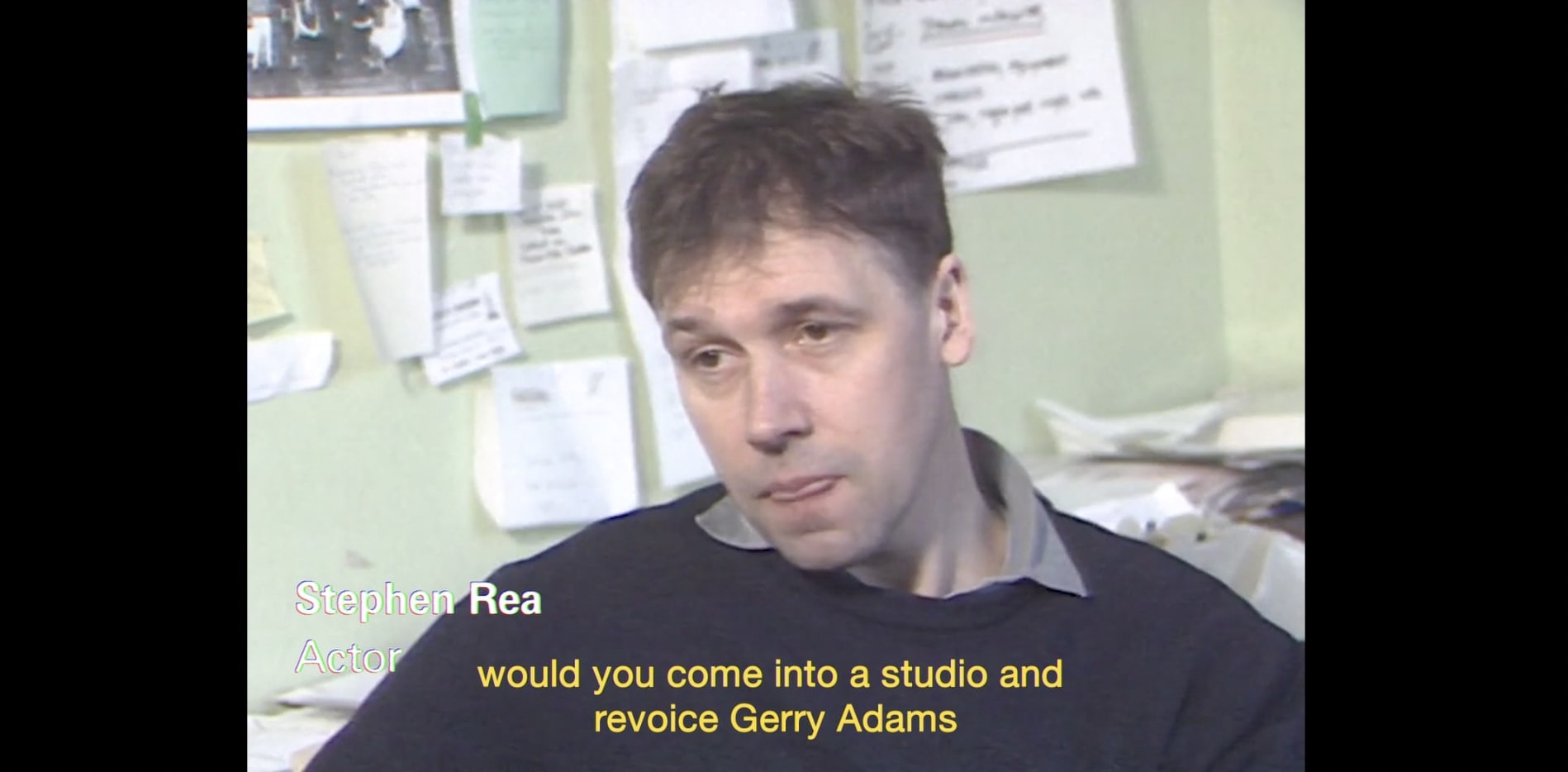
The Ban is short but relatively effective. It primarily comprises archival footage from the era, with a few interviews from relevant persons sprinkled in. As a means of delivering information, it’s not the most riveting method, but perhaps one that is more objective than most. All of the clips used give a good sense of the farcical nature of the broadcast ban. They also provide a good look at the place and time it happened.
Agnew smartly focuses on a select few people, primarily Gerry Adams, the former president of Sinn Féin, whose voice was one of the most affected by the ban. Agnew also uses the voices of the actors hired by the BBC and other organizations to dub over members of Sinn Fein and the IRA. To draw a direct parallel to the past and now, these actors are never seen, except for a few pictures or seconds of footage. They are only ever heard, just as they would have been during the broadcast ban.
Recreating an Era
Cementing all this together is the editing from producer Sam Howard. The editing of the archival footage keeps the purpose of the footage intact, but moves the narrative forward. Nothing overstays its welcome. Howard also emulates the flipping of television channels or the turning on or off of a TV screen. This helps keep the film grounded in its era.
Another bright spot in the film is the graphic design by Theo Inglis. Once again, the graphic design helps to keep the film grounded in its time. At the same time, it effectively communicates the dangers of such a broadcast ban. Combined with the editing and music provided by Oxhy, all of The Ban‘s elements come together to create a thoughtful look at a complicated and oft-forgotten issue.
With that said, the film could provide a little more context around the conflict in Northern Ireland. It assumes the viewer already has a general familiarity with the situation and quickly goes right into covering its main subject. If a viewer is unfamiliar with the broader conflict in Northern Ireland, then they can do a little bit of background research and then watch The Ban. Additionally, the film could go more in-depth on many of the things it covers. It feels like a very surface-level overview of the broadcast ban. It feels like one piece of a larger puzzle. Perhaps, this is the intention, to give viewers just enough to get a sense of what happened and then encourage them to go do their own research on the topic.
The Verdict on Roisin Agnew’s Tribeca Short Film, The Ban
However, even without a broader context, The Ban is still a worthwhile watch. This is especially true now, as fascist regimes attempt to install themselves across the globe and enact their methods of censorship. It’s more critical than ever to be familiar with the past to prevent it from repeating.
Score: 3.5/5
Be sure to check back with The Cinema Spot for more short film and Tribeca reviews! And check out our Facebook, Twitter, Instagram, Bluesky, and Letterboxd pages!


