
Who would’ve thought that modern movies can have heightened, vivid, and expressive colors, exuberant choreographies, detailed costumes and jaw-dropping production design? This is what filmmaker and executive producer Bill Condon reminds all of us—especially modern-day Hollywood filmmakers—in his re-adaptation of sorts of Manuel Puig’s Kiss of the Spider Woman. Of sorts, because Puig’s 1976 novel was adapted into a plethora of works, from an 1985 drama by Héctor Babenco, and a stage musical of the same name by Terrence McNally, John Kander, and Fred Ebb, among others.
Discussion
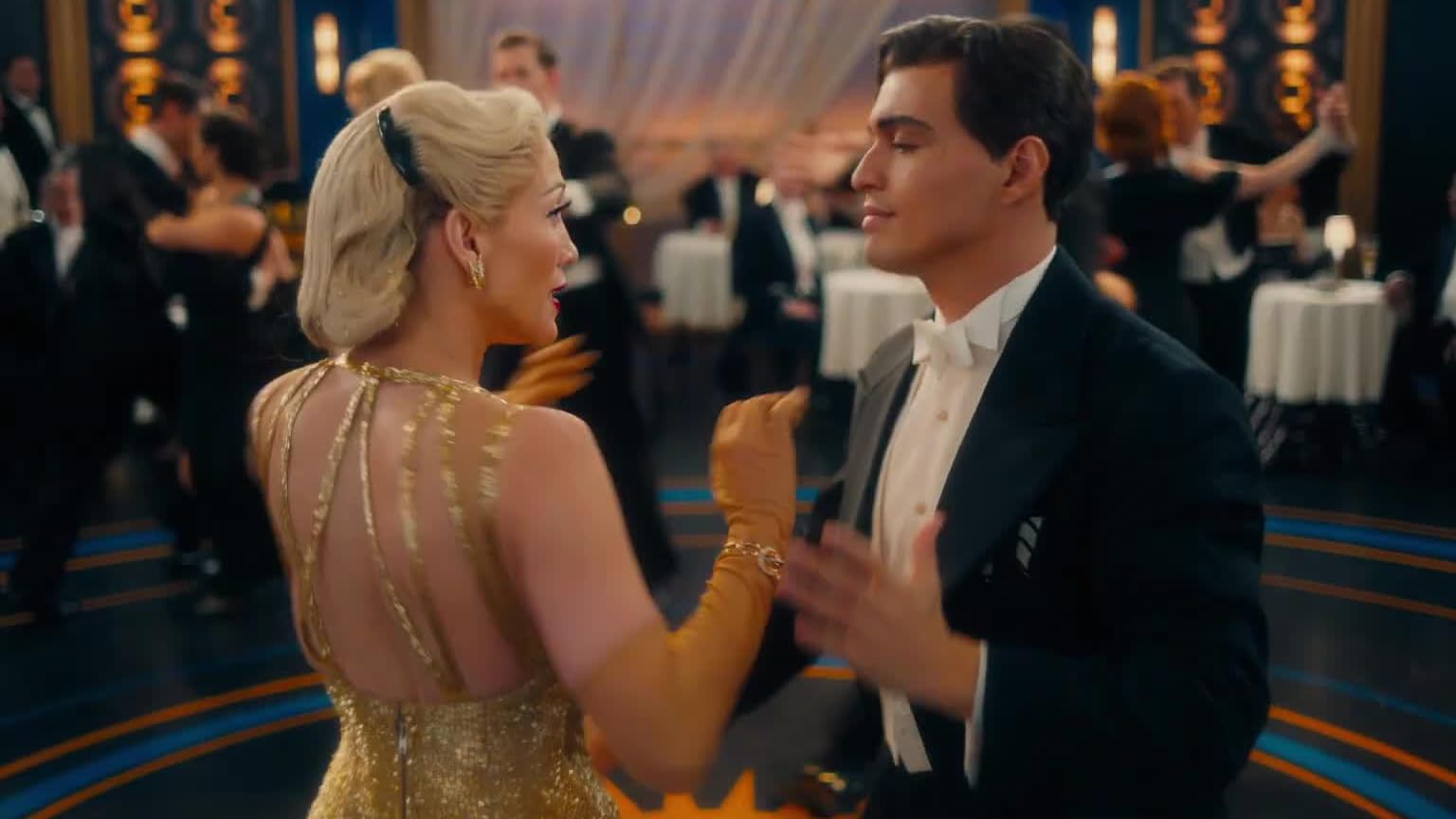
Babenco’s film leaned far less into the fantastical (read: otherworldly) as does the stage musical, which Condon translates to thrilling effect via the framing device of a Technicolor film harkening back to the golden age of movie musicals. Think Vincente Minnelli, Mark Sandrich, Stanley Donen and/or George Cukor. Condon seems to have studied all of them efficiently and crafts a frequently astonishing tribute to the great musicals of a bygone era. That is, an era that Hollywood has now shunned and prefers to hire people who have no business directing them to create the most uninspired images seen in a blockbuster all year, for good.
In that way, executive producer Jennifer Lopez’s (In Living Color, Selena, This Is Me… Now) career-best performance as actress Ingrid Luna recalls the carefree joy of Cyd Charisse’s most storied turns – either in Minnelli’s The Band Wagon, and, most obviously, Gene Kelly and Donen’s Singin’ in the Rain. Therefore, it’s not a coincidence that Lopez wears the same green sequined dress as Charisse does in the latter film, and that she’s on a set that inevitably recalls the greatest movie musical ever made. The 56-year-old actress seemingly makes a statement as she delivers a turn that will be lauded as her finest hour on the silver screen, coming off after a rough period of starring in unwatchable, direct-to-streaming junk. (Atlas is somehow worse than Gigli, if you can believe it.)
Adapting Kiss of the Spider Woman… Again
How Lopez captivates the screen and puts the characters of its diegetic story and extradiegetic framing device under a spell will be studied for decades to come. I have never seen her pour her heart and soul into a performance that’s far more complex than what Sônia Braga accomplished in Babenco’s film. Though, comparing the two sets up this review to fail; both objects couldn’t be more different. It’s a bit like putting Blitz Bazawule’s readaptation of The Color Purple on the same pedestal as Steven Spielberg’s 1985 film. Both aren’t primarily adapting from the same source material – Spielberg is transposing Alice Walker’s novel, while Bazawule is concentrating on the stage musical that derived from the original book.
The same can be said for Condon’s adaptation, so far removed from what Babenco accomplished that it can stand on its own two feet without viewers necessarily needing to see what came before (the movie is also unavailable to rent digitally, although Criterion is preparing to release a physical edition of the film by early next year). This one is more concerned with giving contemporary filmmakers a lesson in how to shoot and choreograph a musical number, allowing the camera to speak and respond to the intricate movements rather than haphazardly placing its central device.
A Refreshing Lens of the Musical
Musical numbers, especially ones set in an otherworldly plane of existence—the movie that prisoner Luis Molina (Tonatiuh) recounts to his cellmate, Valentin Arregui (Diego Luna)—should tickle the imagination and make the audience forget the dreary confines of the world they live in. They should feel expressive and alive. They should leave the audience in wide-eyed awe and make them experience a bevy of emotions that a traditional film can’t achieve.
Of course, there are lots of winks at some of the greatest musicals ever made, but Condon never outright rips them off. He’s a smart enough filmmaker to wear the multiple influences he’s been inspired by on his sleeves and celebrate them in his story of resilience against oppressive forces during a dark time in Argentina’s complex history. One can’t blame Luis for dreaming of a better world and instilling the hope in Arregui that dreaming is possible, even in the face of extreme oppression, and, in this case, living through a military dictatorship that silences its dissenting voices, first by imprisoning them, then by making sure they never return to their families.
Tonatiuh’s Role in the Film
Because of the second season of Andor, which also saw Luna play a revolutionary with “friends everywhere” who stood up against a totalitarian regime, one knows the Mexican actor will fare well in a movie that essentially asks him to play a variation of the same character, albeit one grounded in the reality of the Dirty War instead of a fictitious mirror of the society we live in.
As such, the real revelation of the film isn’t Luna, or Lopez, but Tonatiuh, whose multiplex portrayal of Luis Molina transcends any interpretation of the character—on stage and in film—and takes our breath away at practically every turn. His control of different emotional registers, often in the same scene, is genuinely incredible. Yet, one would have hoped that Condon fleshed this aspect of its story more than the fictitious world in which Molina wants to inhabit, and Arregui also wants to surrender to.
In that case, the queer subtext of Kiss of the Spider Woman doesn’t feel as developed as in the book, and by extension, Babenco’s film, wherein Molina and Arregui slowly begin to experience strong feelings for one another. It’s the dramatic apex of Puig’s text; however, it strangely takes a backseat in Condon’s (a queer filmmaker, might I add) adaptation, preferring a greater emphasis on the musical aspect of the picture rather than intelligently communicating that story with the themes of its “real-world” two-hander inside the prison cell between Molina and Arregui. It also clumsily attempts to give complexity to the former by making him a prison informant. Though, it no longer matters by the time the two become infatuated with each other, and Molina understands what he must do.
Final Thoughts on Kiss of the Spider Woman
The film also leads to a telegraphed—and overlong—climax, which nixes some of the dramatic impact Condon painstakingly built over the course of its 128 minutes. Still, there’s no denying the sheer level of craftsmanship that elevates a production that could have absolutely taken the road of the first-rate junk we’re usually now accustomed to seeing from Hollywood nowadays.
Since Condon refuses to conform to the sludgy non-techniques of populist entertainment, he reminds everyone what movies used to—and should—look (and feel) like as its stars are in total communication with how the Kinsey filmmaker operates each element of his moving picture. Costume designers Colleen Atwood (Chicago, Into the Woods) and Christine L. Cantella’s outfits are note-perfect, production designer Scott Chambliss’s purposefully artificial sets will put a smile on your face, and the wondrously realized color palette will make you yearn for a Hollywood that makes Capital C Cinema.
Since Kiss of the Spider Woman sadly flopped at the box office (and only played for a week in this critic’s area while he was away at a festival), we are likely to get more garbage than actual movies one can parse and discuss for days on end. However, if it instills in audiences (and perhaps filmmakers) a true sense of wonder and imagination again, then maybe, just maybe, we will see some improvement in the illuminating power—and magic—of movies again.
For more drama and musical-related news and reviews, follow The Cinema Spot on Facebook, Twitter, and Instagram! Also, follow us on Letterboxd for further feature film, short film, and limited series reviews!


